
Scientists at the Terasaki Institute for Biomedical Innovation (TIBI) have made a significant breakthrough in the field of energy harvesting by using artificial intelligence (AI) to optimize the design and production of nanofibers. These nanofibers are integral to the construction of wearable nanofiber acoustic energy harvesters (NAEHs) that convert ambient sound into electrical energy. Traditionally, capturing sound energy efficiently has been challenging, especially from low-frequency sounds which are prevalent in the environment. By integrating AI, TIBI researchers have managed to improve the performance of these harvesters, achieving a power density more than 2.5 times higher and an energy conversion efficiency significantly greater than conventional devices. This advancement not only enhances the effectiveness of devices like hearing aids but also opens up new possibilities for sustainable energy solutions in personalized healthcare.
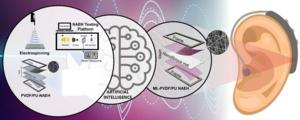
Revolutionizing Energy Harvesting – AI Enhances Nanofiber Design
AI techniques have significantly improved the design and performance of wearable acoustic energy harvesters.
1–2 minutes

TOP STORIES

Obama stresses Democrats must prioritize AI safety and economic strategy …

Amodei’s call for caution in AI development highlights the need for safety and alignment …

Sony Music and Warner Music have sued Anthropic, accusing it of copyright infringement in AI training …

Huang believes Nvidia’s position in AI will lead to another year of record growth …

Anthropic’s report reveals a surge in distillation attacks by Chinese AI firms on U.S. models …

AI agents’ autonomy poses significant risks, as demonstrated by a recent breach …



