
The use of artificial intelligence in weather forecasting has taken a significant leap forward with the development of the AI Aurora model, which has been shown to outperform traditional models in 74% of data, including wind speed, wind direction, and humidity. The model, developed by a team of researchers, uses a “foundation model” that mimics the human brain, allowing it to make decisions and predictions with unprecedented accuracy and speed. The AI model has been trained on over a million hours of diverse weather and climate simulations, enabling it to develop a comprehensive understanding of atmospheric dynamics. The team has tested the model on extreme weather events, including Storm Ciaran, and has achieved impressive results, outperforming other AI models and traditional forecasting methods. The potential implications of this technology are far-reaching, with the possibility of democratizing access to accurate weather and climate information in data-sparse regions, and enabling communities to better adapt to the challenges posed by climate change.
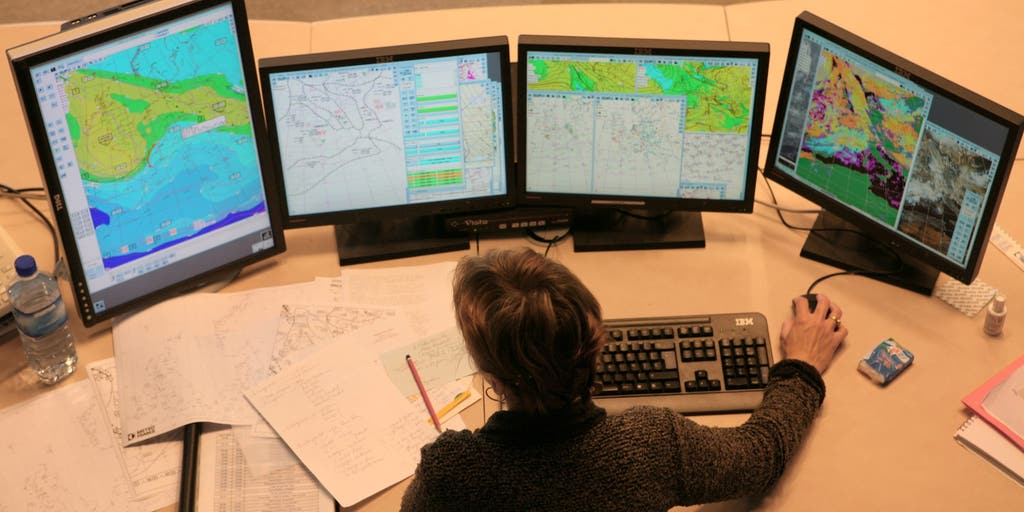
Revolutionizing Weather Forecasting with AI
Aurora takes just seconds to form a 10-day global weather forecast, 5-day pollution forecast or concentrations of greenhouse gases using a single GPU.
1–2 minutes

TOP STORIES

Obama stresses Democrats must prioritize AI safety and economic strategy …

Amodei’s call for caution in AI development highlights the need for safety and alignment …

Sony Music and Warner Music have sued Anthropic, accusing it of copyright infringement in AI training …

Huang believes Nvidia’s position in AI will lead to another year of record growth …

Anthropic’s report reveals a surge in distillation attacks by Chinese AI firms on U.S. models …

AI agents’ autonomy poses significant risks, as demonstrated by a recent breach …



