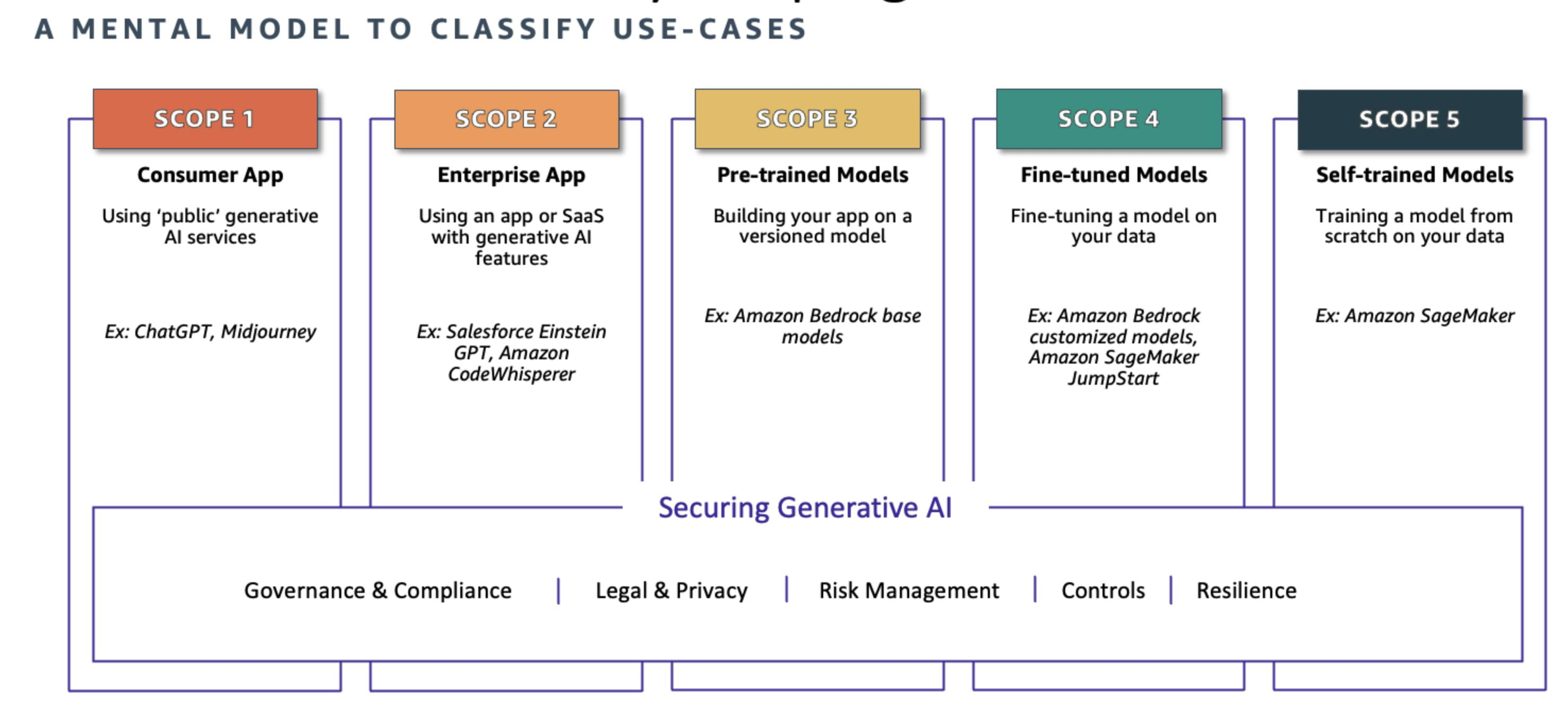
Generative AI is revolutionizing customer experiences across industries through advanced large language models and neural networks. However, as organizations adopt this technology, cybersecurity leaders must swiftly address associated risks and governance. This article, the first in a series, outlines a mental model for assessing generative AI security, emphasizing the importance of established cloud security practices while recognizing the unique challenges posed by generative AI workloads. The Generative AI Security Scoping Matrix, a key tool introduced here, helps organizations categorize their AI solutions into five scopes, ranging from consumer apps to self-trained models, each with distinct security considerations. By understanding and categorizing these scopes, security practitioners can prioritize critical security measures. The article underscores the necessity of blending foundational security disciplines with new strategies tailored to the unique threats of generative AI, ensuring a secure and compliant deployment of this transformative technology.
Securing Generative AI – A Strategic Guide for Organizations
Generative AI is transforming industries, but securing it demands both established and new strategies.
1–2 minutes

TOP STORIES

Quantum computing is transforming industries, but it poses significant cybersecurity risks …

A coalition of state attorneys general has opened an investigation into OpenAI …

The U.S. government’s export control directive has forced Anthropic to disable its new AI models, raising questions about regulation and …

SpaceX’s recent deal with Google highlights its shift from aerospace to AI infrastructure …

Google is suing to dismantle the infrastructure behind an alleged massive AI-powered cybercrime operation …

AI usage continues to grow rapidly, even as public sentiment remains skeptical …