
Nvidia, the tech company that started as a conversation among three engineers at a Denny’s in San Jose in 1993, has now become the poster child of the artificial intelligence boom, with a market value of over $3.2 trillion. The company’s dominance as a chipmaker has led to the development of “AI factories” and multimodal AI models that can understand text, speech, images, video, and 3-D data. Nvidia’s CEO, Jensen Huang, has dubbed this moment “the next industrial revolution.” The company’s invention of the graphics processor unit (GPU) in 1999 sparked the growth of the PC gaming market and redefined computer graphics. Now, Nvidia’s specialized chips are key components that help power different forms of artificial intelligence, including generative AI chatbots. The company’s early lead in the hardware and software needed to tailor its technology to AI applications has given it a significant advantage, and analysts estimate that its revenue will reach $119.9 billion by 2025.
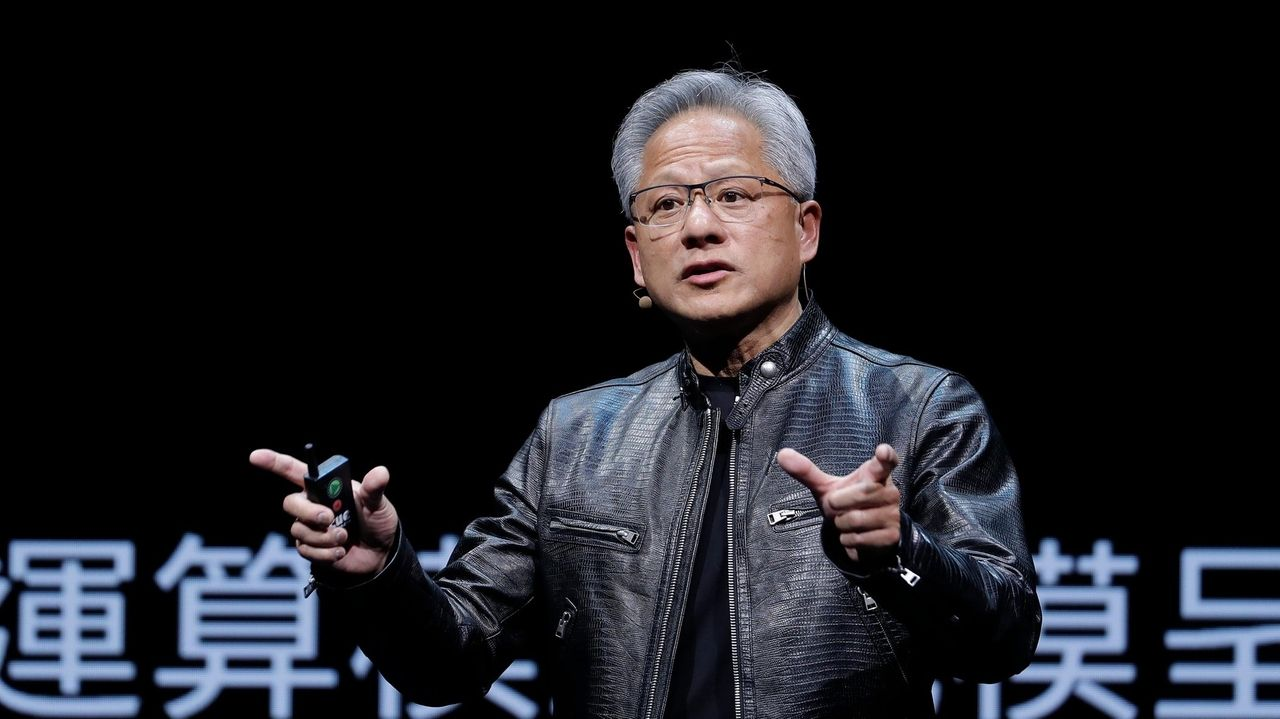
Nvidia’s AI Revolution
Nvidia’s GPUs are a key factor in the company’s success in artificial intelligence, and they basically ended up creating a market that didn’t exist, which was GPUs for AI, or GPUs for machine learning.
1–2 minutes

TOP STORIES

Obama stresses Democrats must prioritize AI safety and economic strategy …

Amodei’s call for caution in AI development highlights the need for safety and alignment …

Sony Music and Warner Music have sued Anthropic, accusing it of copyright infringement in AI training …

Huang believes Nvidia’s position in AI will lead to another year of record growth …

Anthropic’s report reveals a surge in distillation attacks by Chinese AI firms on U.S. models …

AI agents’ autonomy poses significant risks, as demonstrated by a recent breach …



