
Etched has announced a $120 million funding round to develop its specialized AI chip, Sohu, which aims to transform AI processing by embedding the transformer architecture directly into its hardware. This approach promises to deliver unprecedented performance for transformer models, positioning Etched as a formidable competitor to industry giant Nvidia. Etched’s founders, who dropped out of Harvard, have garnered substantial backing from notable investors including Peter Thiel. The company is betting on the scaling laws of AI, asserting that larger models and better training data will lead to superintelligent systems. By focusing on transformers, Etched claims that its Sohu chip will be significantly faster and more cost-effective than Nvidia’s next-gen GPUs. The company plans to partner with TSMC for production and has already secured reservations from major AI companies. Etched’s strategy underscores the inevitability of specialized chips in the AI market, predicting that their adoption will revolutionize AI product economics and capabilities.
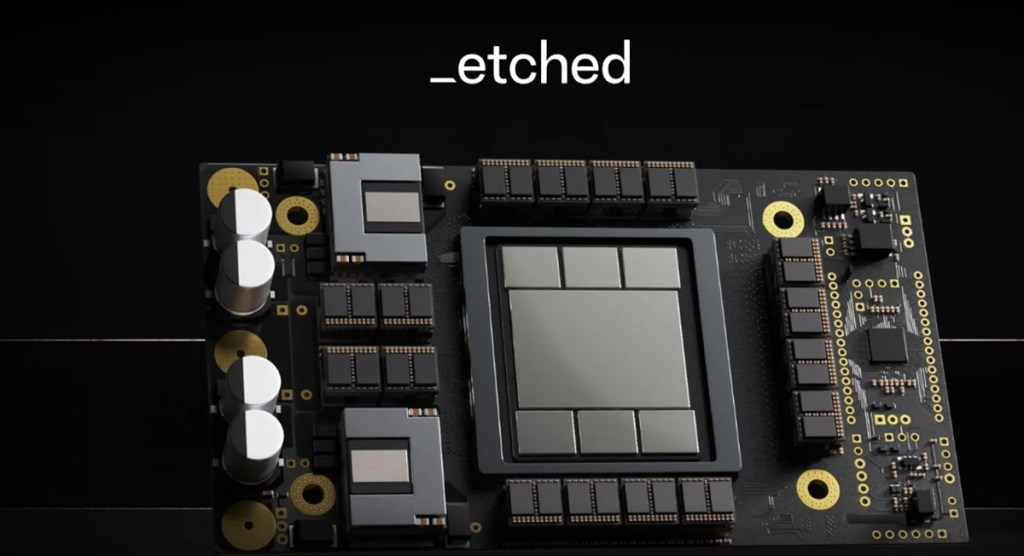
Etched Challenges Nvidia with Groundbreaking AI Chip, Raises $120M
Etched has raised $120 million to develop Sohu, the world’s fastest transformer chip.
1–2 minutes

TOP STORIES

Obama stresses Democrats must prioritize AI safety and economic strategy …

Amodei’s call for caution in AI development highlights the need for safety and alignment …

Sony Music and Warner Music have sued Anthropic, accusing it of copyright infringement in AI training …

Huang believes Nvidia’s position in AI will lead to another year of record growth …

Anthropic’s report reveals a surge in distillation attacks by Chinese AI firms on U.S. models …

AI agents’ autonomy poses significant risks, as demonstrated by a recent breach …



