The West Virginia Office of Disciplinary Counsel has released a legal ethics opinion urging lawyers in the state to exercise caution and transparency when using artificial intelligence (AI) tools in their daily work. The opinion differentiates between non-generative AI, which uses existing data to provide transparent predictions and analysis, and generative AI, whose algorithms are less transparent and creates its own content. Lawyers are advised to review all AI-generated content for accuracy and errors, receive approval from clients before using generative AI, and avoid sharing confidential information with AI programs. The opinion encourages the use of AI by lawyers, but not to replace their own legal reasonings. I believe this warning is a necessary step in ensuring that lawyers in West Virginia are aware of the potential risks and benefits of using AI in their practice, and that they take the necessary steps to maintain their ethical obligations. The use of AI can greatly improve the efficiency and accuracy of legal services, but it is crucial that lawyers remain vigilant and maintain their professional judgment.
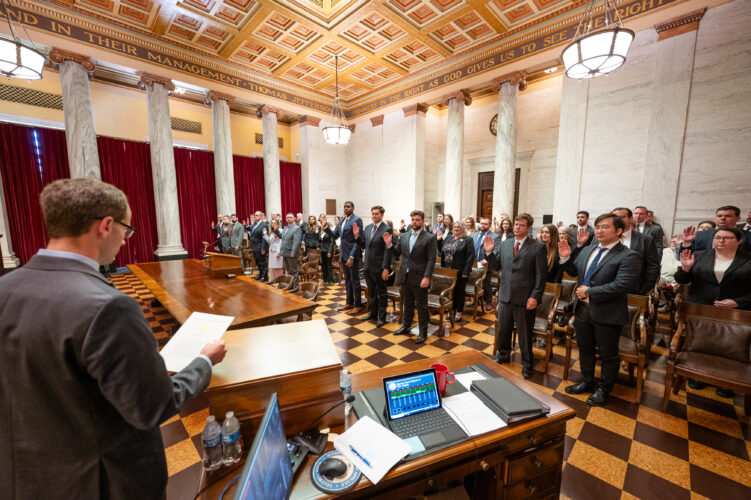
West Virginia Lawyers Warned on AI Use
“Machine learning systems are only as good as the data they are trained on,”
1–2 minutes

TOP STORIES

AI leaders warn that advancements in technology could enable the creation of bioweapons, urging for immediate regulatory measures …

Apple has unveiled Siri AI, transforming it into an advanced conversational assistant …

Anthropic’s call for a global pause in AI development raises critical safety concerns …

Microsoft aims for AI independence with new models and infrastructure …

Sriram Krishnan leaves the Trump administration to focus on future AI initiatives …

Trump discusses AI partnerships that could allow public profit-sharing …