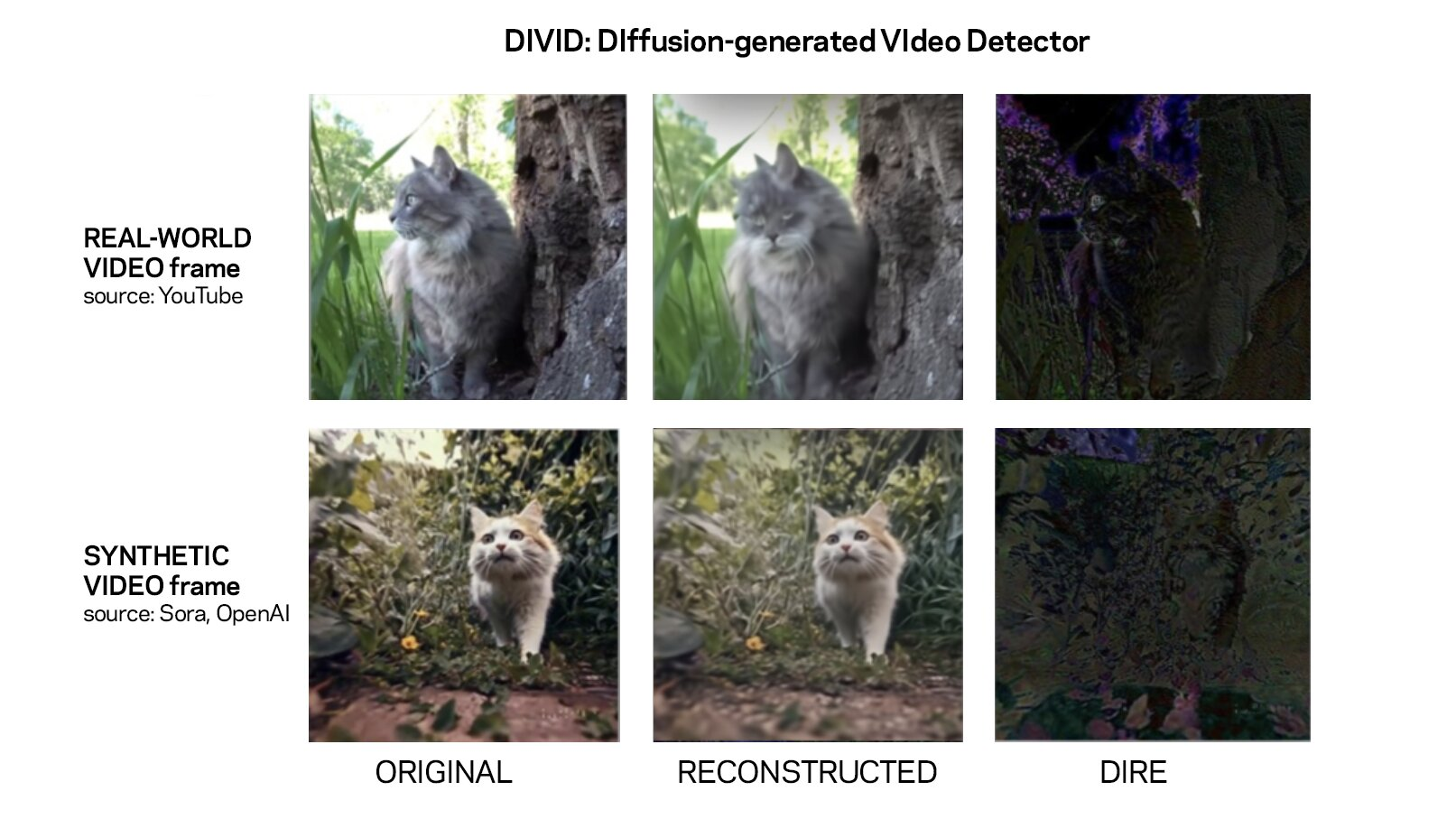
Researchers at Columbia Engineering have developed a groundbreaking tool, DIVID, to detect AI-generated videos with an accuracy of up to 93.7%. This innovation comes as a response to the increasing sophistication of AI-generated videos, which have become almost indistinguishable from real ones, making it challenging to identify their authenticity. The DIVID tool uses a technique called DIRE, which measures the difference between an input image and the corresponding output image reconstructed by a pretrained diffusion model. This method allows DIVID to detect diffusion-generated videos by analyzing the reconstructed video against the original video.
The researchers’ work builds upon their earlier project, Raidar, which detects AI-generated text by analyzing the text itself. The development of DIVID marks a significant step forward in detecting AI-generated content, and its potential integration into plugins or websites could make it accessible to a wider range of users. This technology has the potential to combat scams and protect society from the misuse of AI-generated videos.