
The supply chain industry’s backbone, warehouses, are evolving rapidly due to the integration of artificial intelligence and robotics. The global warehousing and storage market, valued at $714 billion in 2023, faces increased complexity due to fast-paced logistics demands. The COVID-19 pandemic has pushed for de-risking supply chains and reshoring manufacturing, making automation essential. Innovations like autonomous drones and robotic arms are transforming inventory management and product handling, respectively. Autonomous drones, equipped with spatial AI and computer vision, provide real-time inventory tracking even in GPS-challenged environments. Robotic arms, utilizing machine learning, handle diverse products with precision, reducing manual errors and costs. Human-machine collaboration is enhanced through robots with large language models (LLMs) that comprehend and respond to human language, fostering smoother integration. Additionally, Robots-as-a-Service (RaaS) models make advanced technology accessible and scalable for businesses, reducing financial risks. These advancements promise a more efficient, accurate, and safe warehousing future.
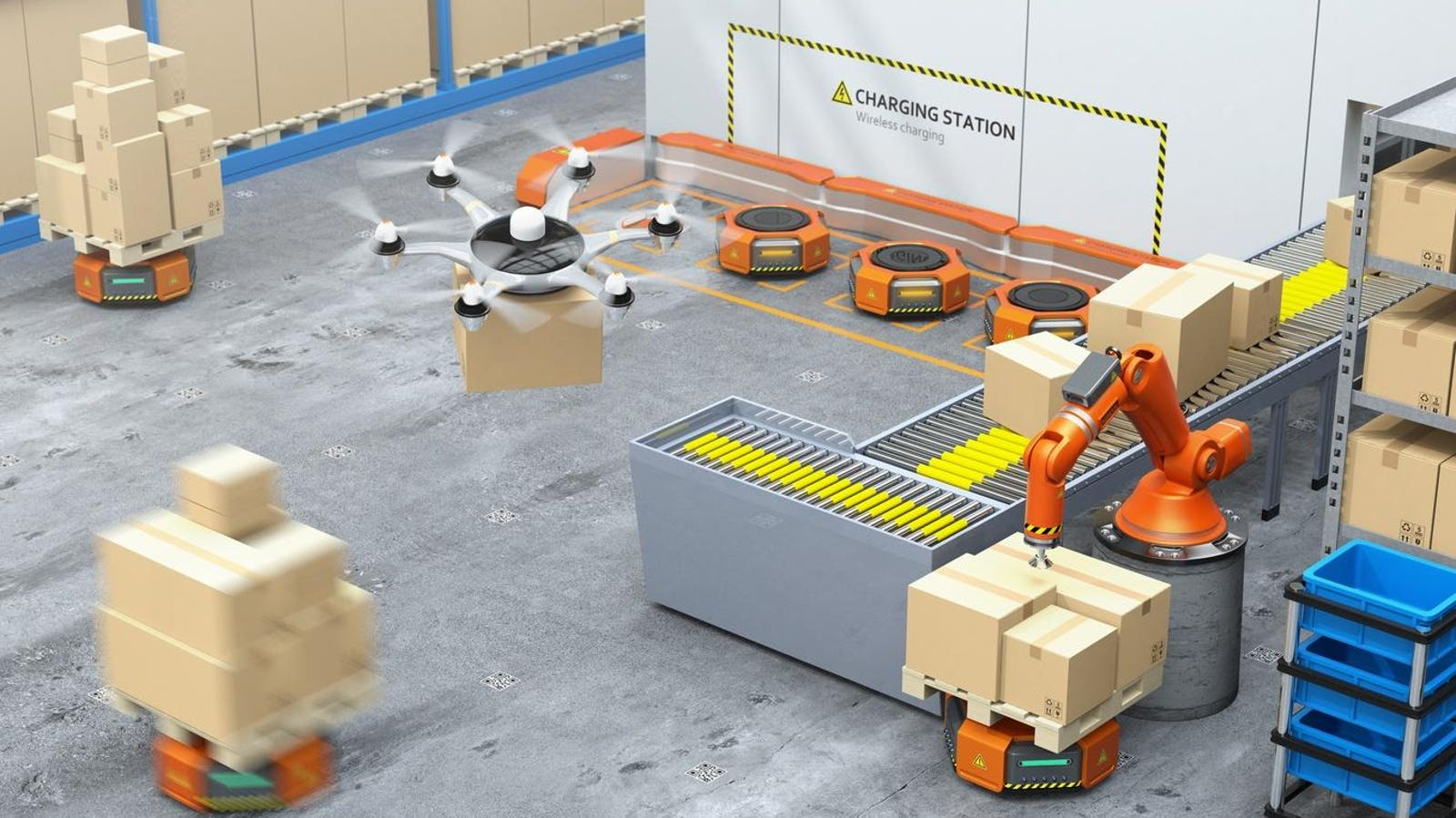
Transforming Warehousing – How AI and Robots Revolutionize Logistics
Warehouses are evolving rapidly due to the integration of AI and robotics.
1–2 minutes

TOP STORIES

Obama stresses Democrats must prioritize AI safety and economic strategy …

Amodei’s call for caution in AI development highlights the need for safety and alignment …

Sony Music and Warner Music have sued Anthropic, accusing it of copyright infringement in AI training …

Huang believes Nvidia’s position in AI will lead to another year of record growth …

Anthropic’s report reveals a surge in distillation attacks by Chinese AI firms on U.S. models …

AI agents’ autonomy poses significant risks, as demonstrated by a recent breach …



