
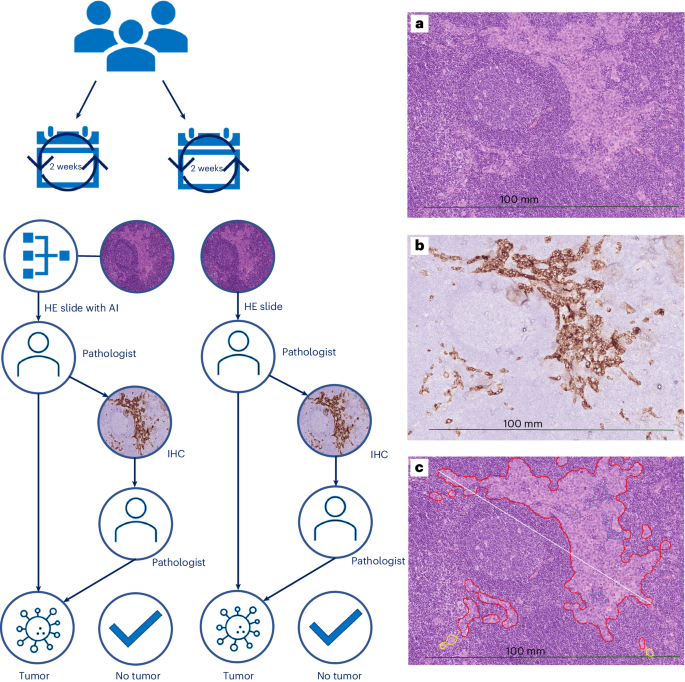
The implementation of artificial intelligence (AI) assistance in pathology has been shown to significantly reduce the risk of immunohistochemistry (IHC) use per detected case of sentinel node (SN) metastasis, resulting in cost savings and time efficiency. In a single-center prospective trial, AI-assisted pathologists spent less time assessing hematoxylin and eosin (HE) slides of SN specimens and had higher sensitivity and negative predictive values for detecting micrometastases and macrometastases. The study also found that AI assistance prevented the use of IHC for detecting micrometastases and reduced the cost of IHC use per detected case of SN metastasis.
AI Assistance in Pathology Reduces Costs and Time
AI-assisted pathologists spent significantly less time assessing HE slides of SN specimens, with an average time of 3 minutes and 41 seconds compared to 6 minutes and 4 seconds for unassisted pathologists.

TOP STORIES

CERT-In reported that AI agents accessed sensitive data in Indian organizations during testing phases …

Flock’s gunshot detection technology faces backlash amid privacy concerns …

OpenAI has alerted the FBI after an employee allegedly planted a hidden recording device in an executive conference room …

Character.AI’s bankruptcy filing reveals the challenges of scaling AI products …

Meta’s new Muse Wonder models promise enhanced capabilities and memory retention for personal AI assistants …

Apple is tightening privacy controls on macOS to protect users from AI risks …



