
Social media platforms, particularly Facebook, have become flooded with bizarre AI-generated images that blur the line between reality and surrealism. These photos—ranging from amputee kittens on crutches to strawberries shaped like frogs—are often accompanied by manipulative captions and are designed to capture user engagement. Khan Schoolcraft, who moderates the Facebook group “AI Boomertrap,” collects such examples and points out how easily people are fooled by these images. Experts like Jonathan Gilmore and Robert Hopkins debate whether these creations should be considered genuine art, challenging traditional definitions and criteria. The images, despite their kitschy and often politically conservative content, provoke strong emotional responses. Artist Polina Kostanda, who uses AI for more refined, meaningful creations, contrasts sharply with the low-quality “slop” prevalent on social media. The article delves into the philosophical and aesthetic implications of AI-generated images, pondering whether they can ever be valued as true art or are merely the digital equivalent of spam.
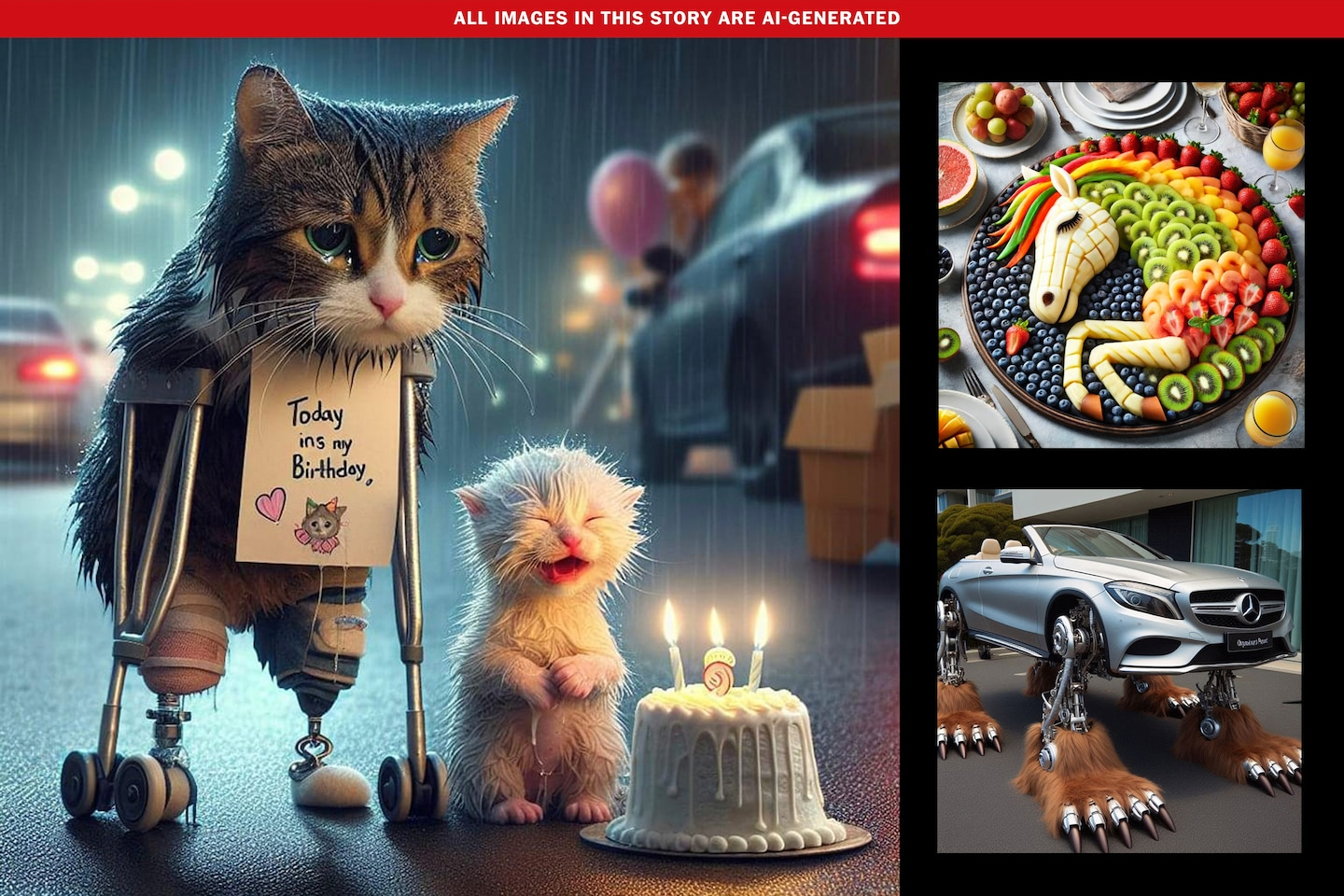
The Rise of AI-Generated Surrealism – Art or Digital Deception?
These unsettling images appear in our social media feeds, sometimes as a jump scare, and sometimes as a Trojan horse.
1–2 minutes

TOP STORIES

Obama stresses Democrats must prioritize AI safety and economic strategy …

Amodei’s call for caution in AI development highlights the need for safety and alignment …

Sony Music and Warner Music have sued Anthropic, accusing it of copyright infringement in AI training …

Huang believes Nvidia’s position in AI will lead to another year of record growth …

Anthropic’s report reveals a surge in distillation attacks by Chinese AI firms on U.S. models …

AI agents’ autonomy poses significant risks, as demonstrated by a recent breach …



