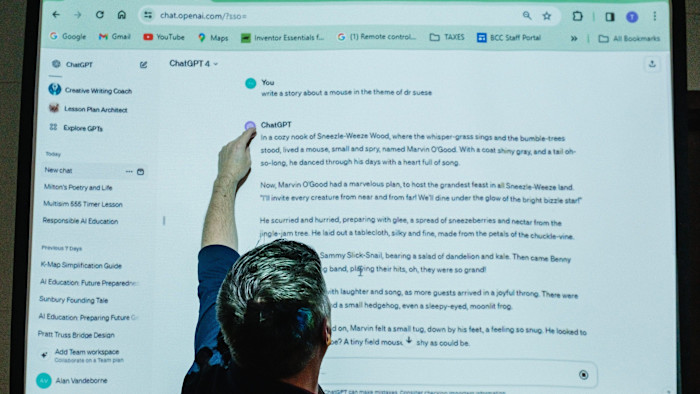
As generative AI continues to advance, educators are faced with the daunting task of integrating these tools into the learning environment while balancing innovation with ethical considerations, assessment concerns, and instructor comfort. A taxonomy of options has emerged, ranging from a complete ban on AI tools to unrestricted use, each with its own implications for student learning, assessments, and academic integrity. While some institutions may opt for a restrictive approach, citing concerns about originality and critical thinking, others may adopt a more permissive stance, leveraging AI as a catalyst for creativity and improvement. Ultimately, the key to harnessing the full potential of generative AI in education lies in striking a balance between innovation and ethical considerations.

Navigating the AI Education Conundrum – A Taxonomy of Options
The expansion of generative AI tools within the educational environment illustrates the diverse ways in which these tools can be integrated into learning environments.
1–2 minutes

TOP STORIES

AMD’s Helios aims to redefine AI computing, challenging Nvidia’s dominance …

OpenAI has launched ChatGPT Health to assist U.S. users with health queries while emphasizing the need for professional medical advice …

Nvidia’s Jetson chips are set to become the first GPUs on the moon, enhancing lunar exploration …

Google’s Gemini AI assistant is rapidly growing, nearing 1 billion users and challenging ChatGPT …

Michael Kratsios raises alarms about Moonshot’s alleged copying of U.S. AI technology …

The upcoming release of Kimi K3 raises concerns about the safety and control of powerful open-source AI systems …