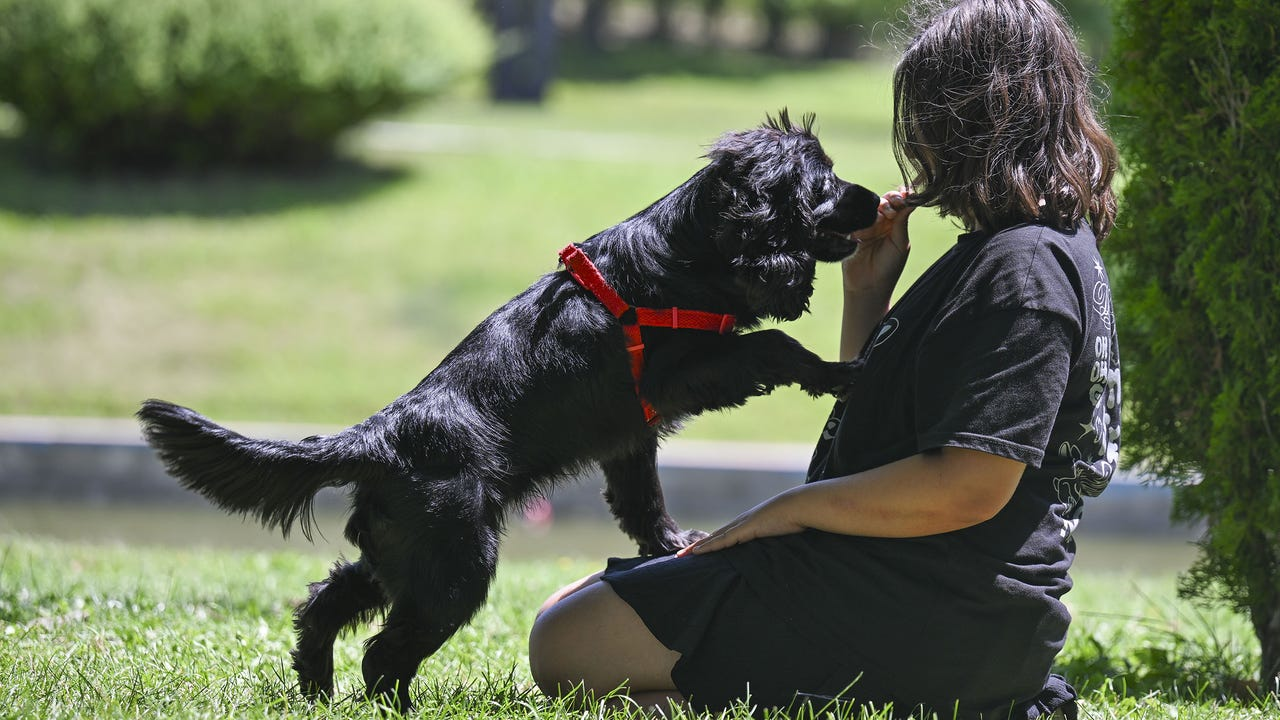
The University of Michigan is pioneering research into using artificial intelligence to decipher dog communication. This groundbreaking study aims to distinguish between playful and aggressive barks, as well as determine a dog’s age, breed, and sex from its vocalizations. The research team, led by Rada Mihalcea, director of U-M’s AI laboratory, is adapting human speech processing models to analyze canine acoustic patterns.
Key points of the study include:
- Researchers analyzed vocalizations from 74 dogs in various contexts
- AI models originally trained on human speech were used as a foundation
- The study found that human speech patterns can be applied to understanding animal vocalizations
- Lack of publicly available data on animal vocalizations poses a challenge
This research has significant implications for animal welfare and human-canine interactions. By better understanding dog communication, humans can more effectively interpret and respond to their needs, potentially improving care and preventing dangerous situations. The study also opens up new possibilities for using AI to comprehend other forms of animal communication, suggesting that existing speech processing technology could be a valuable starting point for future research in this field.