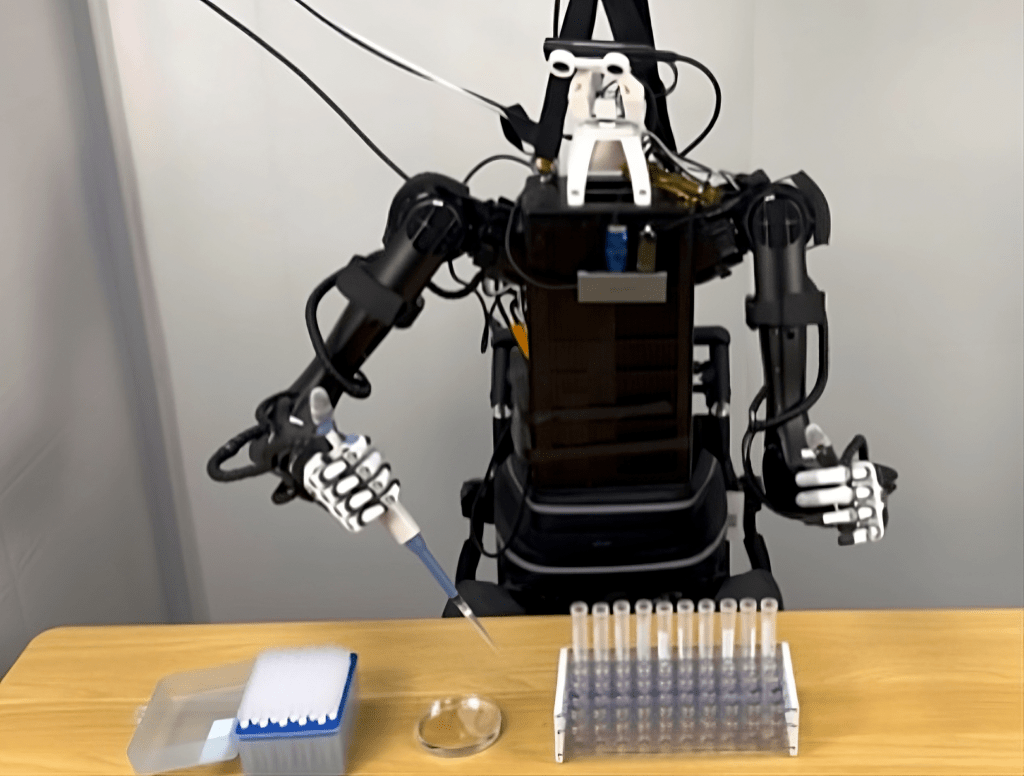
The MIT and UCSD researchers have unveiled a groundbreaking system called “Open-TeleVision” that revolutionizes robot control. This innovative technology creates an immersive experience for operators, allowing them to perceive the robot’s surroundings and mirror their hand and arm movements.
The system offers several key advantages:
- Seamless interface between human operators and robotic bodies
- Leverages human cognitive abilities while extending physical reach
- Enables adaptability, intuition, and creative problem-solving
Open-TeleVision has wide-ranging applications, including disaster response, telesurgery, space exploration, and industrial maintenance. It operates by streaming operator movements to a server, which then controls the robot’s actions. The system includes a stereo camera that moves with the operator’s head, providing real-time 3D observations.
This technology represents a shift in robotics research, focusing on enhancing human control rather than solely pursuing autonomous AI systems. It offers enterprises an opportunity to accelerate automation initiatives by leveraging existing human expertise. As the field evolves, combining human and artificial intelligence may prove to be the most effective approach, opening up new possibilities for human-robot collaboration across industries.