
The Rise of Intelligent Machines
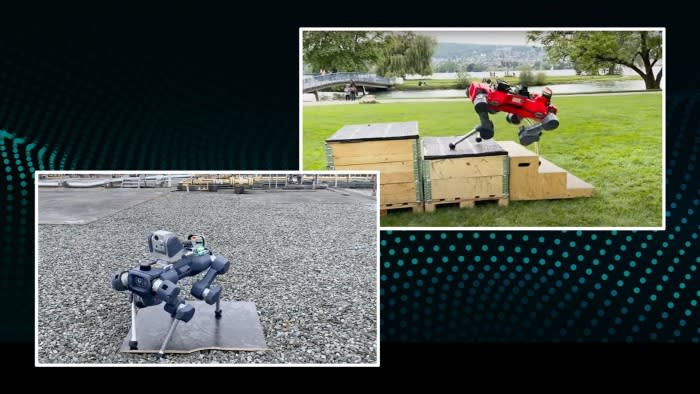
AI-powered robots are revolutionizing the industrial landscape, showcasing remarkable adaptability and autonomy. These machines, once limited to basic tasks, can now perform complex actions like parkour-style tricks without explicit programming. This leap in capabilities is driven by advancements in artificial intelligence, particularly in neural networks that mimic human brain function.
Key Developments and Applications
- Major tech companies like Google, OpenAI, and Tesla are racing to develop AI “brains” for autonomous robots
- Improved computer vision and spatial reasoning allow robots to navigate diverse environments
- Deep learning models enable robots to adapt to unexpected challenges and learn independently
- Generative AI enhances robots’ understanding of their surroundings and communication with humans
- Applications range from industrial settings to potential domestic use
Impact and Future Prospects
The integration of AI into robotics is transforming industries from manufacturing to healthcare. While humanoid robots are gaining attention, the technology is still developing and expensive. However, the market for AI-powered robots is growing rapidly, with significant investment in startups. This trend is expected to continue as AI advances make robots more flexible, cost-effective, and accessible to smaller businesses. The future may see robots conducting scientific experiments, assisting in retail environments, and becoming increasingly accepted in public spaces.





