
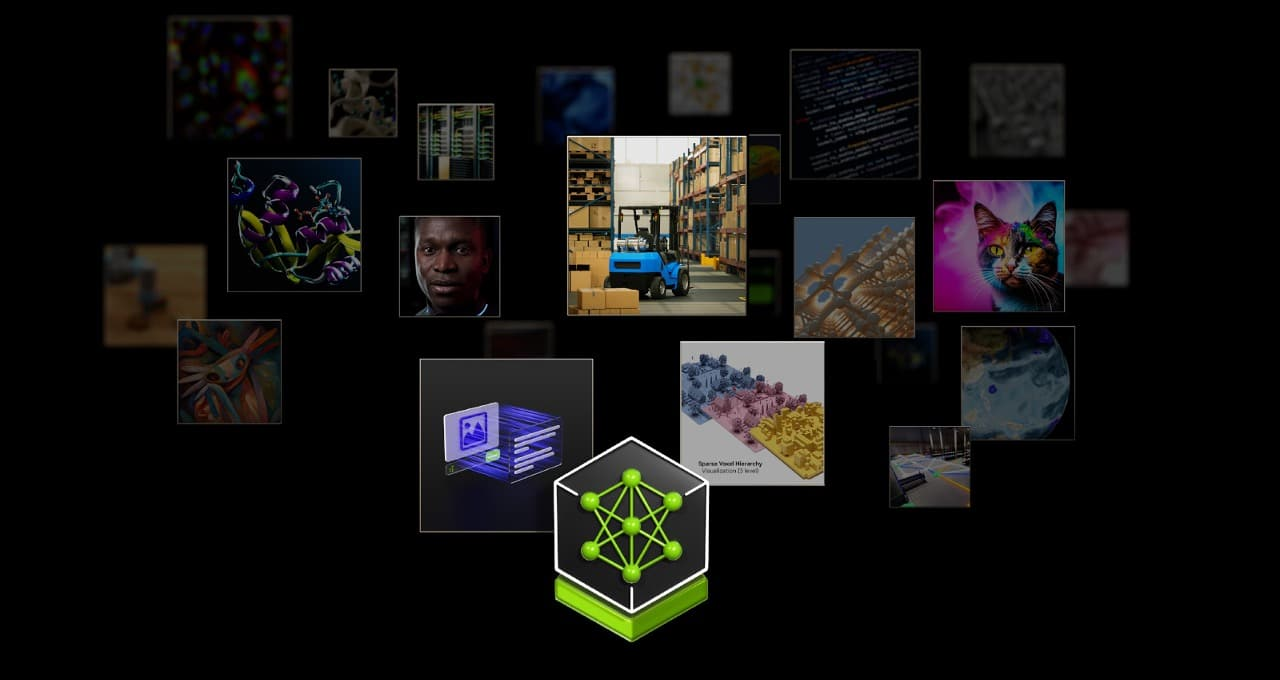
Bridging Digital and Physical Realms
NVIDIA’s latest advancements in generative physical AI are set to transform how we interact with the physical world. The company has unveiled new tools and technologies that enable developers to create more sophisticated and interactive visual AI agents, bridging the gap between digital perception and real-world interaction.
Key Developments:
- NVIDIA Metropolis reference workflow for building interactive visual AI agents
- New NVIDIA NIM microservices for training physical machines
- fVDB NIM microservices supporting NVIDIA’s deep learning framework for 3D worlds
- OpenUSD NIM microservices for working with Universal Scene Description
Transforming Industries and Smart Spaces
These innovations have far-reaching implications across various sectors. From manufacturing and healthcare to smart cities and autonomous vehicles, generative physical AI is enhancing decision-making, accuracy, and performance in complex environments. The technology is powering visual AI agents deployed in hospitals, factories, warehouses, and urban settings, revolutionizing how we manage and interact with physical spaces.
Real-World Applications
In Palermo, Italy, city officials are using NVIDIA NIM-powered visual AI agents to analyze traffic cameras in real-time, providing insights and suggestions for improving urban operations. Manufacturing giants like Foxconn and Pegatron are leveraging these technologies to create virtual factories, optimizing their operations and enhancing worker safety.
The integration of synthetic data generation and simulation-first approaches is addressing the challenges of training complex AI models, particularly in scenarios where real-world data collection is impractical or costly. This breakthrough is accelerating the development and deployment of robust, adaptable AI systems across various industries.
By enabling machines to perceive, reason, and navigate their surroundings more effectively, NVIDIA’s generative physical AI advancements are paving the way for a future where digital and physical realms seamlessly interact, promising unprecedented levels of efficiency, safety, and innovation in our daily lives and industrial processes.





