
The Rise of Trustworthy Medical AI
In the rapidly evolving landscape of medical artificial intelligence, a surprising contender has emerged as a frontrunner. While tech giants invest heavily in large language models, a recent study reveals that a smaller player is delivering superior results in clinical accuracy and physician trust.
Key Findings
- Five AI systems were evaluated on their ability to provide reliable medical advice
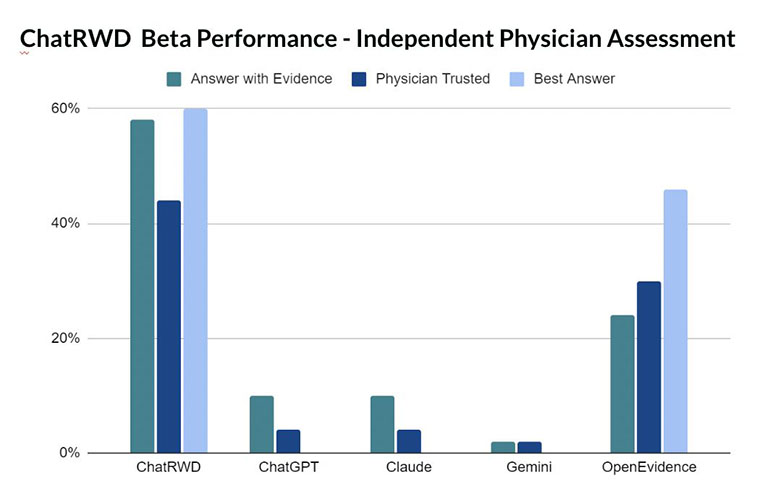
- Well-known large language models (LLMs) like ChatGPT-4, Claude 3 Opus, and Gemini Pro 1.5 struggled, providing relevant responses to only 2-10% of questions
- ChatRWD, developed by Atropos Health, outperformed competitors with a 58% success rate in delivering relevant, evidence-based answers
- LLMs frequently “hallucinated” citations, with 25-47% of their sources being fictitious or irrelevant
Implications for Healthcare
The study underscores the critical need for trustworthy, clinical-grade generative AI in healthcare. As the industry shifts from prioritizing convenience to emphasizing trust and accuracy, smaller, specialized players like Atropos Health are gaining an edge. Their focus on providing rapid, high-quality real-world evidence to support clinical decision-making addresses a crucial gap in healthcare, where traditional clinical trials often exclude a significant portion of patients with comorbidities. This development signals a potential transformation in how healthcare professionals access and utilize AI-powered tools for patient care and research.





