
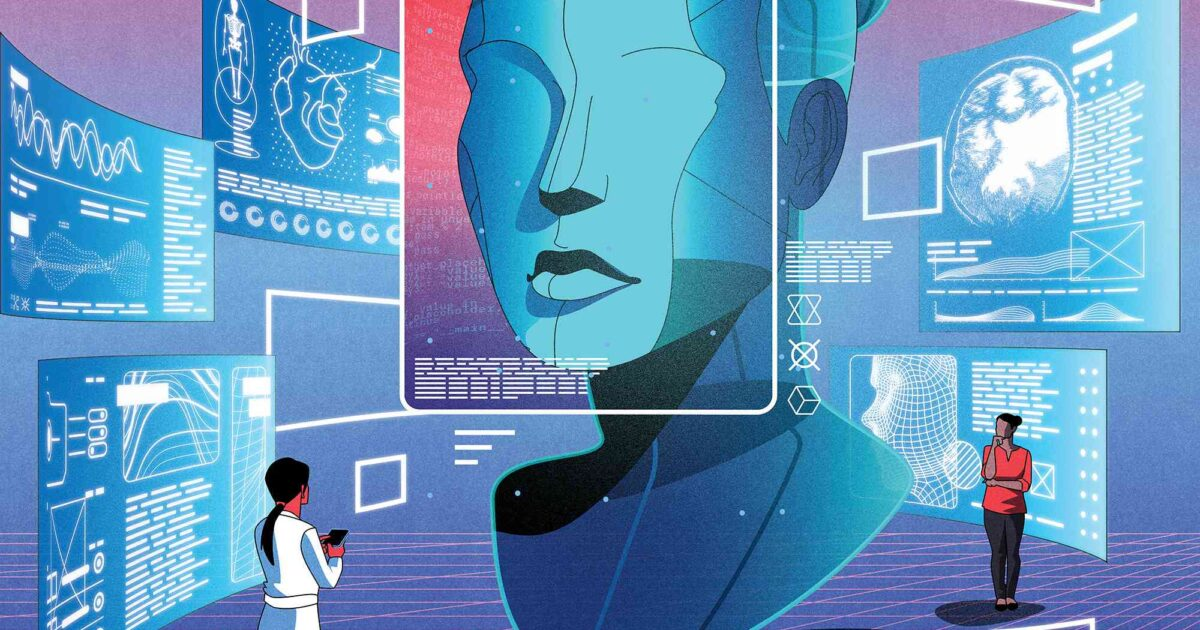
The Promise of AI in Healthcare
Artificial Intelligence (AI) is revolutionizing medical diagnosis and treatment across the University of Rochester. From psychiatry to radiology, AI tools are enhancing clinical capabilities and streamlining processes. However, this technological leap brings forth important questions about ethics, fairness, and maintaining the human element in healthcare.
Key Developments and Applications
- Professor Caroline Easton’s avatar-guided cognitive behavioral therapy app for addiction treatment
- AI algorithms analyzing medical images to quickly identify urgent issues like pulmonary embolisms
- Automation of administrative tasks, freeing up clinicians to focus more on patient care
- Development of FDA-cleared AI-assisted pathology tools for cancer diagnosis
Ensuring Responsible AI Integration
While AI offers numerous benefits, experts emphasize the need for careful implementation:
- Addressing potential biases in AI algorithms and training data
- Maintaining human oversight in AI-assisted decision-making
- Rigorous testing and FDA certification for AI medical tools
- Continuous refinement of AI systems using diverse patient data
The Irreplaceable Human Element
Despite AI’s advancements, healthcare professionals stress that technology cannot replace human expertise and empathy. AI is seen as a complement to, not a replacement for, clinician-centered care. The goal is to integrate AI responsibly, enhancing medical capabilities while preserving the essential human connection in healthcare.





