
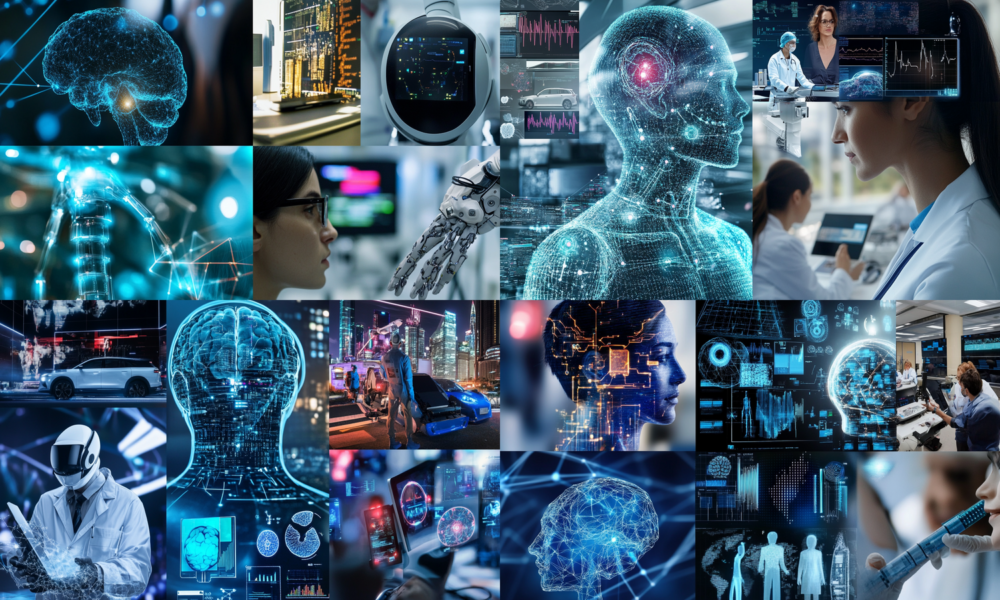
AI’s Transformative Impact
Artificial Intelligence is revolutionizing industries across the board, from healthcare to manufacturing, finance to education. A 2023 IBM survey reveals that 42% of enterprise-scale businesses have already integrated AI, with another 40% considering adoption. This widespread embrace of AI is driven by its potential to boost productivity and economic growth.
Key Developments:
- PWC estimates AI will contribute $15.7 trillion to the global economy by 2030
- 45% of economic gains are expected from AI-driven product enhancements
- $6.6 trillion boost to GDP likely from increased productivity
Innovative Applications
1. Predicting Thermal Properties:
- New AI model predicts phonon dispersion relations up to 1 million times faster than traditional methods
- Enables more efficient design of microelectronics and energy conversion systems
- Helps address the 70% of global energy lost as waste heat
2. Ensuring Fairness in Resource Allocation:
- Structured randomness in AI models improves fairness without compromising efficiency
- Particularly beneficial for allocating scarce resources like welfare benefits or medical treatments
- Helps reduce bias and systemic exclusion in decision-making processes
3. Personalized Language Learning:
- AI-powered system creates customized storybooks for children’s language development
- Utilizes home IoT devices to capture and analyze a child’s language environment
- Offers tailored learning experiences based on individual needs and progress
Why It Matters
These advancements demonstrate AI’s versatility and its potential to address complex challenges across various sectors. From improving energy efficiency to ensuring fairness in resource allocation and enhancing educational tools, AI is proving to be a powerful force for innovation and progress. As businesses and researchers continue to explore AI’s capabilities, we can expect even more groundbreaking applications that will shape our future in profound ways.





