Understanding the Breakthrough
Infertility is a significant issue affecting many couples, prompting a search for effective solutions like in vitro fertilization (IVF). However, traditional embryo selection methods rely heavily on subjective assessments by clinicians, leading to inconsistent results. A team of researchers from China has developed an advanced AI system designed to automate embryo selection. This system aims to enhance the accuracy and efficiency of selecting embryos for implantation, ultimately improving the chances of successful pregnancies.
Key Features of the AI System
- The AI employs multitask learning to assess embryos at various developmental stages.
- It utilizes a vast dataset of 19,201 embryo images to train its algorithms.
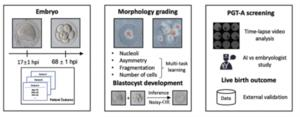
- Four main modules are included: embryo morphology grading, blastocyst formation assessment, aneuploidy detection, and live-birth prediction.
- The AI system outperformed traditional methods, achieving higher accuracy in identifying viable embryos and predicting live-birth outcomes.
Significance of the Innovation
This AI technology presents a significant advancement in reproductive medicine. By reducing reliance on subjective human assessment, it offers a more objective and data-driven approach to embryo evaluation. This innovation could lead to increased IVF success rates, providing hope to couples facing infertility. Moreover, it minimizes the need for costly genetic testing, making IVF more accessible. As AI continues to evolve in healthcare, its potential to transform fertility treatments and improve patient outcomes is immense.