
Overview of the Current Landscape
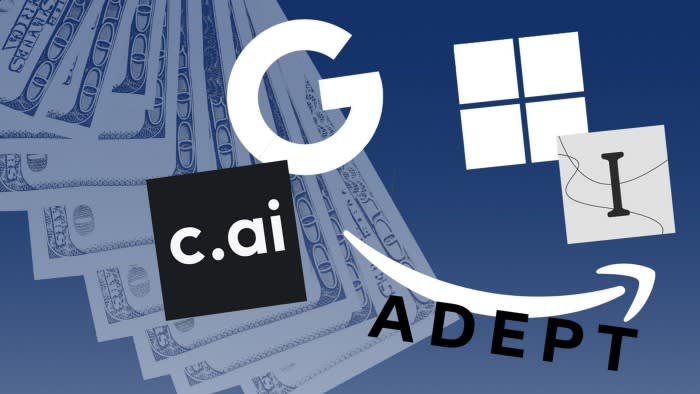
The recent trend of Big Tech companies acquiring promising artificial intelligence start-ups poses a significant threat to venture capitalists. In the past six months, three notable start-ups—Inflection, Character.AI, and Adept—have been absorbed by tech giants like Microsoft, Google, and Amazon. These companies had collectively raised over $2 billion in funding but have seen their top talent and innovations swept away by larger firms. This trend raises concerns that venture capitalists may be sidelined in the rapidly evolving AI sector, where only the largest players can afford the hefty costs of developing advanced AI technologies.
Key Details
- Google’s acquisition of Character.AI resulted in a $2.5 billion deal, valuing the start-up at 2.5 times its previous worth, yet yielding modest returns for its investors.
- Microsoft and Amazon’s deals with Inflection and Adept, respectively, offered little financial reward for their venture capital backers, merely recouping original investments.
- Founders and key personnel from these start-ups have returned to Big Tech after initially leaving, highlighting the challenge of scaling AI start-ups without substantial resources.
- The future of AI development may favor larger companies due to their ability to invest billions in building necessary infrastructure, such as vast data centers.
Implications for the Future
The current dynamics in the AI sector may lead to a concentration of power among Big Tech firms, limiting opportunities for smaller start-ups. While venture capitalists face a challenging environment, they remain hopeful that innovation will continue. Regulatory scrutiny may also change the landscape, as antitrust investigations into major deals could alter the balance of power. Despite the challenges, there are still numerous start-ups working on innovative AI projects, suggesting that the sector could still yield significant breakthroughs in the long run.





