Understanding the Challenge
Sequential tasks in robotics can be complex, especially in unpredictable environments. Robots often struggle to learn from their past actions, which limits their ability to improve over time. Researchers focus on making robots more autonomous and efficient, but current methods like reinforcement learning (RL) require excessive trials and often fail in dynamic settings. This leads to repeated mistakes and ineffective task completion.
Key Developments
- Researchers at Rice University developed the RAG-Modulo framework.
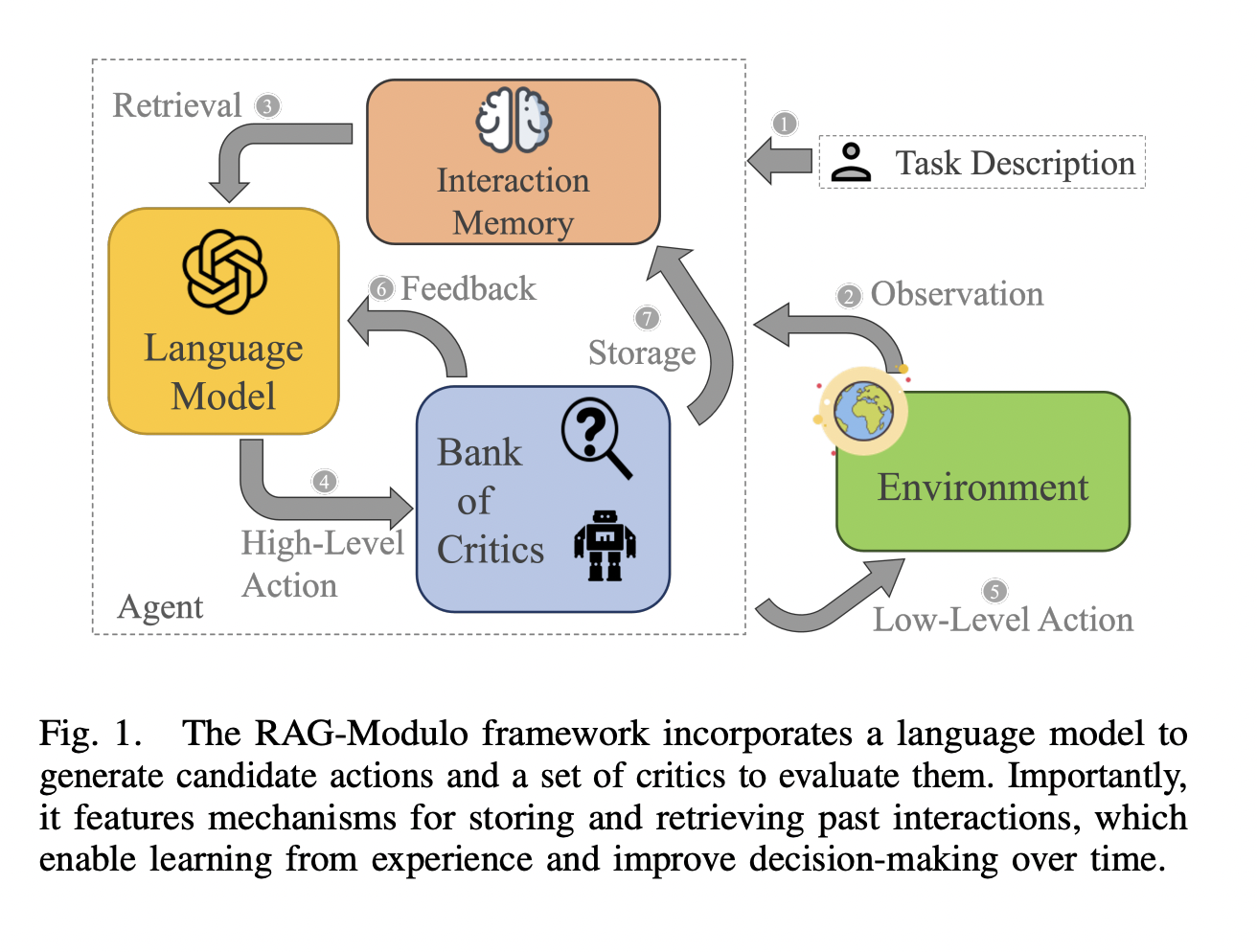
- This system includes an interaction memory that allows robots to store and recall past actions.
- Critics within the framework assess the feasibility of actions, enhancing decision-making.
- RAG-Modulo has shown significant improvements in benchmark tests, outperforming existing models.
Significance of the Innovation
The RAG-Modulo framework marks a major advancement in robotic learning. By enabling robots to remember and apply knowledge from past experiences, it addresses a critical gap in existing systems. This capability allows robots to handle complex tasks more efficiently, reducing the time and effort required for task execution. As robots become more reliable and autonomous, they can better adapt to real-world challenges, paving the way for broader applications in various industries.