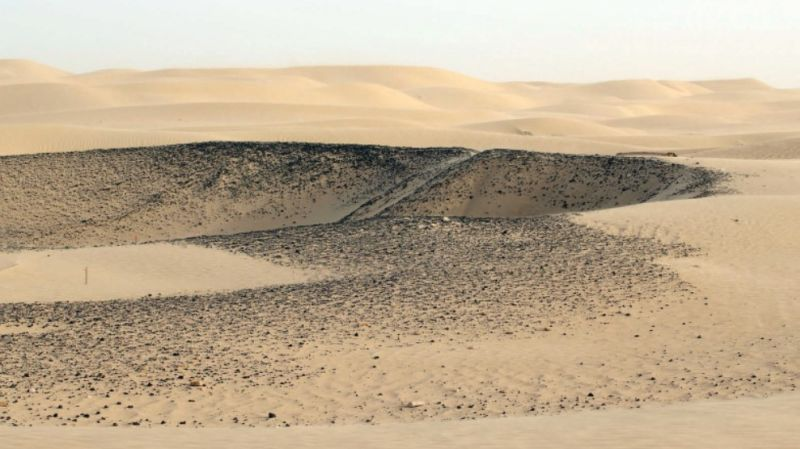
Exploring New Frontiers in Archaeology
A groundbreaking project by researchers at Khalifa University is transforming how archaeologists locate sites in harsh desert environments. The team has developed a machine learning algorithm that analyzes synthetic aperture radar (SAR) images to detect buried archaeological structures. Traditional methods, such as ground surveys, are often ineffective in vast deserts like the Rub al-Khali due to challenging conditions. By combining SAR technology with machine learning, the researchers can identify potential sites with remarkable precision, paving the way for future excavations.
Key Highlights
- SAR imagery has advantages over optical images, as it can see through sand and dust.
- The algorithm was trained using data from the Saruq Al-Hadid site, revealing new excavation areas.
- The technology can create 3D models of buried structures, aiding in excavation planning.
- Other researchers are also using AI to uncover hidden archaeological sites in different regions, showcasing its growing importance.
Significance of the Innovation
The integration of AI and SAR technology represents a significant advancement in archaeological research. It allows for more efficient exploration of areas that may have been overlooked due to their harsh conditions. By identifying potential sites, archaeologists can focus their efforts more effectively, potentially leading to the discovery of important historical artifacts. This method could revolutionize how archaeology is conducted in deserts worldwide, opening new avenues for understanding ancient civilizations and their cultures.