Understanding the Divide
Generative AI has been a hot topic since the launch of ChatGPT, with contrasting views from business leaders and employees. While executives are optimistic about the potential for cost savings and increased productivity, many workers express concerns over job security. A recent survey by ADP Research Institute revealed that over 40% of employees fear their roles could be replaced by generative AI.
Key Insights
- Generative AI automates various tasks, from copywriting to complex data analysis, using algorithms trained on extensive data.
- The U.S. ranks highly in AI preparedness, but many companies remain unready to implement these technologies.
- A significant portion of executives believes AI will disrupt their industries within five years, particularly in financial services and manufacturing.
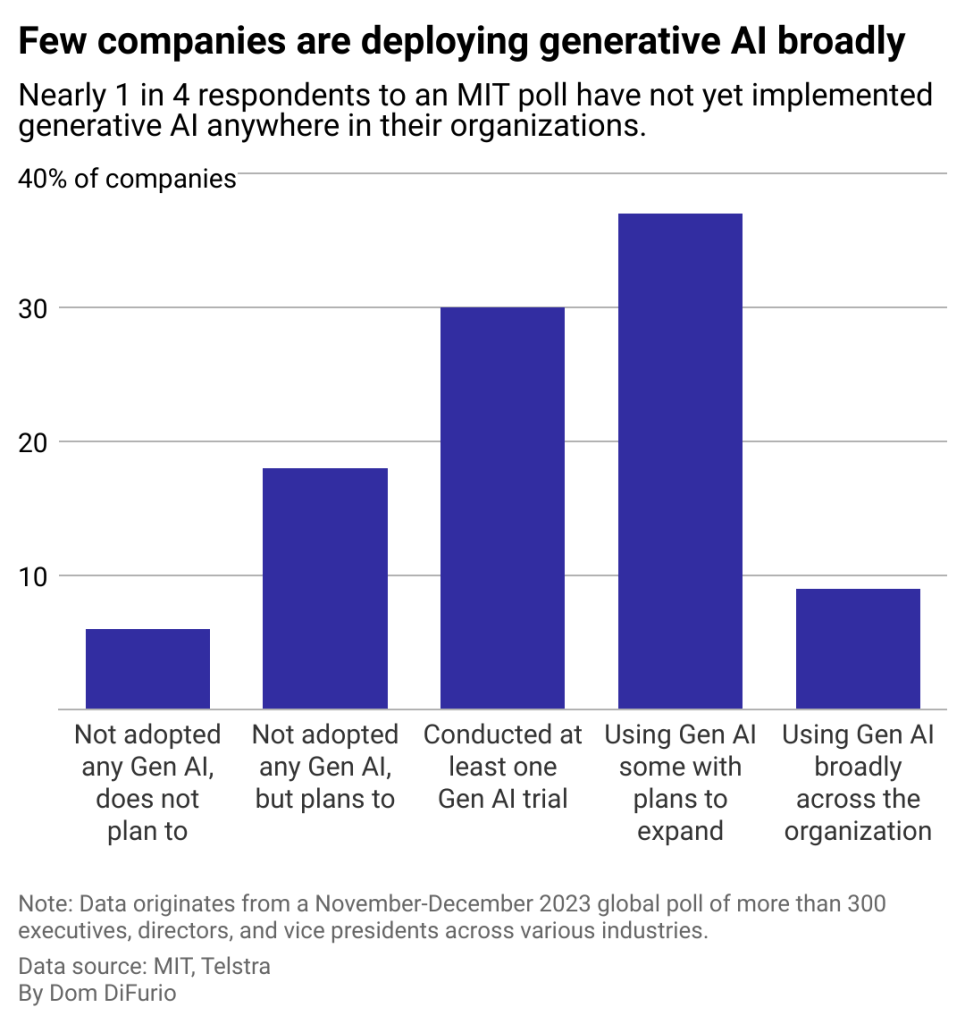
- Currently, fewer than 10% of surveyed firms use generative AI widely, with many still in trial phases or hesitant to adopt.
The Bigger Picture
The contrasting views on generative AI highlight a critical issue in the workplace. While businesses are eager to embrace technology for competitive advantage, the fear among employees could hinder its adoption. Companies must address concerns about job displacement and invest in training and infrastructure to ensure a smooth transition. If generative AI is to be truly transformative, organizations need to secure funding, develop ethical guidelines, and foster a culture of innovation to alleviate worker anxieties and maximize potential benefits.