Revolutionizing Surgical Procedures
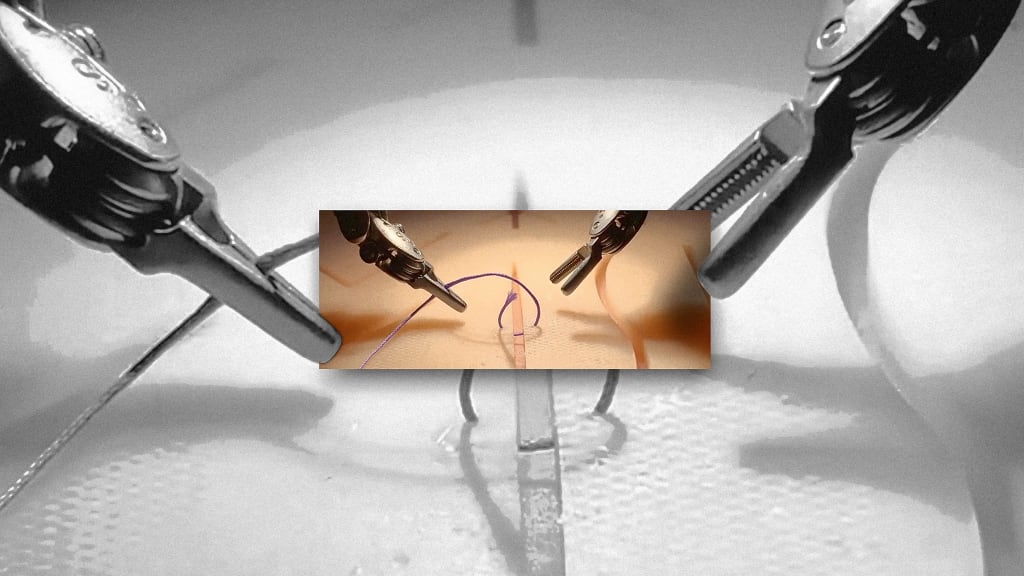
A groundbreaking development in surgical technology has emerged, where artificial intelligence (AI) is being trained to perform complex surgical tasks. Researchers at Johns Hopkins University have successfully taught an AI to use a robotic surgery machine by making it observe thousands of hours of actual surgeries. This innovation, termed imitation learning, allows the AI to replicate the actions of human surgeons without the need for explicit programming. The AI can learn to handle delicate tasks such as suturing and tissue manipulation, achieving performance levels comparable to human surgeons. This opens up exciting possibilities for the future of healthcare.
Key Insights
- The AI learned from over 10,000 videos of surgeries, enabling it to understand nuanced differences in surgical techniques.
- It can adapt to new scenarios, such as unexpected complications during surgery, by applying its learned skills.
- The research team worked closely with surgeons to refine the AI’s capabilities, ensuring it meets high standards of precision and adaptability.
- The potential for reduced surgery times and improved outcomes could significantly enhance patient care, especially in areas with limited access to human surgeons.
Implications for Healthcare
This advancement in AI surgery could transform medical practices, particularly in underserved regions where human surgeons are scarce. The technology promises to improve surgical precision and reduce human error, leading to better patient outcomes. However, ethical and regulatory challenges remain, including accountability and patient consent. As the technology develops, a careful and gradual approach will be necessary to ensure safety and build public trust in AI-assisted surgeries. The future of healthcare may see AI robots becoming an integral part of surgical teams, ultimately expanding access to life-saving procedures worldwide.