Understanding the Breakthrough
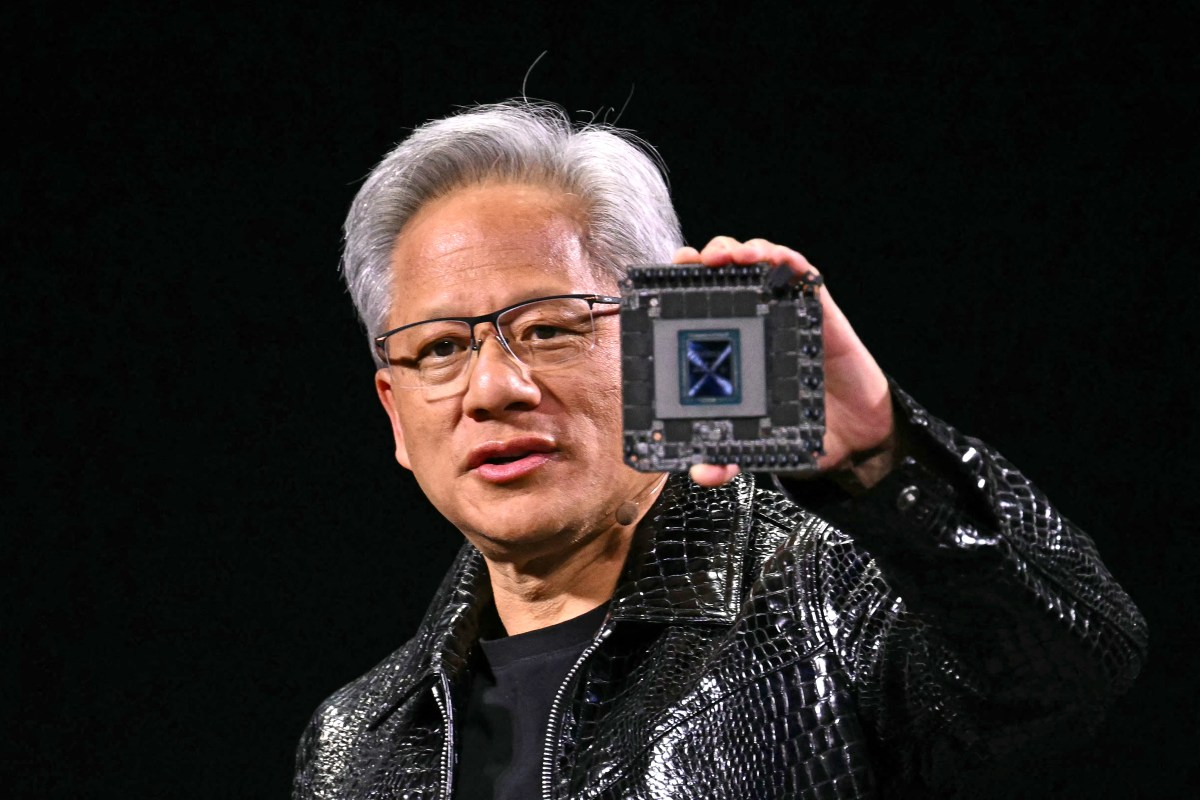
Nvidia CEO Jensen Huang has made a bold statement regarding the performance of the company’s AI chips, claiming they are advancing quicker than the historical benchmarks set by Moore’s Law. Moore’s Law, established in 1965, indicated that the number of transistors on chips would double approximately every year, leading to significant improvements in computing power. However, Huang argues that Nvidia’s latest chips are achieving over 30 times faster performance for AI inference tasks compared to previous models. He emphasizes that by innovating across the entire technology stack, Nvidia can outpace traditional limits.
Key Highlights
- Nvidia’s new GB200 NVL72 chip is 30 to 40 times faster than its predecessor for AI tasks.
- Huang identifies three active AI scaling laws: pre-training, post-training, and test-time compute, which help improve AI model performance.
- The cost of running AI models, particularly during inference, is expected to decrease as Nvidia enhances its chip capabilities.
- Huang believes that the advancements in AI chips will lead to more affordable AI solutions in the long run, despite initial high costs.
Significance of the Advancements
These developments are crucial as they suggest that AI technology is not stagnating but rather evolving rapidly. As Nvidia’s chips become more efficient, the costs associated with running complex AI models could drop significantly, making advanced AI accessible to more users. This could lead to broader applications of AI across various sectors, fostering innovation and enhancing productivity. Huang’s projections indicate a promising future for AI technology, with Nvidia positioned at the forefront of this evolution.