
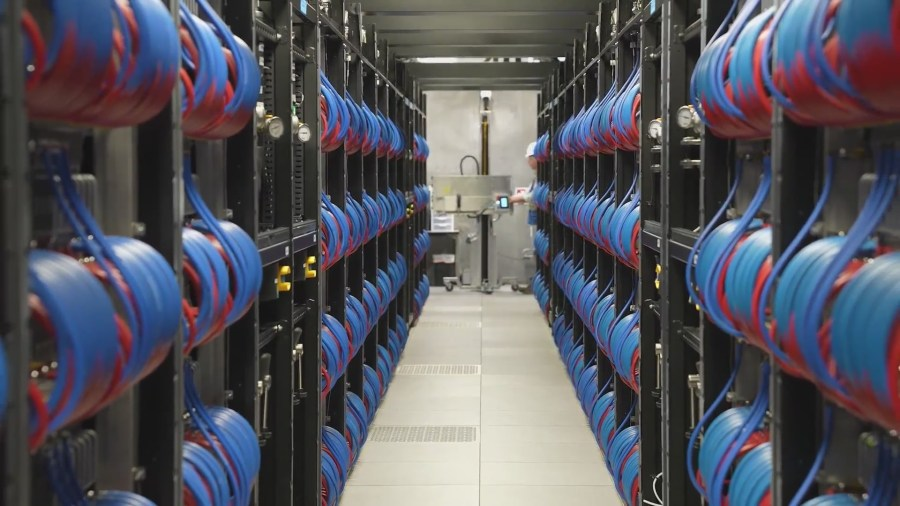
Overview of Aurora’s Impact
Aurora, the world’s fastest artificial intelligence supercomputer, has recently been unveiled at Argonne National Laboratory in Chicago. This cutting-edge technology represents a significant leap in computational power and is set to transform various fields, including medicine, environmental science, and energy production. Built over eight years through a collaboration between Hewlett Packard Enterprise, Intel, and Argonne, Aurora’s capabilities extend far beyond traditional computing.
Key Features and Applications
- Aurora can perform two billion-billion calculations per second, making it immensely powerful compared to earlier supercomputers.
- It will aid in mapping the human brain, modeling disease spread, and developing new treatments.
- The supercomputer will enhance weather forecasting, allowing for more accurate predictions of extreme weather events by analyzing real-time data.
- Aurora’s generative machine learning enables it to identify patterns in large data sets, which can lead to breakthroughs in various sectors, including better materials for technology.
Significance of Aurora
The introduction of Aurora marks a pivotal moment in scientific research and technological advancement. As researchers harness its power, they aim to tackle complex global challenges, from health crises to climate change. The potential for Aurora to improve weather forecasting and medical research could lead to significant societal benefits. However, the focus remains on responsible use and oversight of AI technology to ensure it serves humanity positively. As countries race to develop similar technologies, maintaining ethical standards and transparency will be crucial in shaping the future of AI.





