
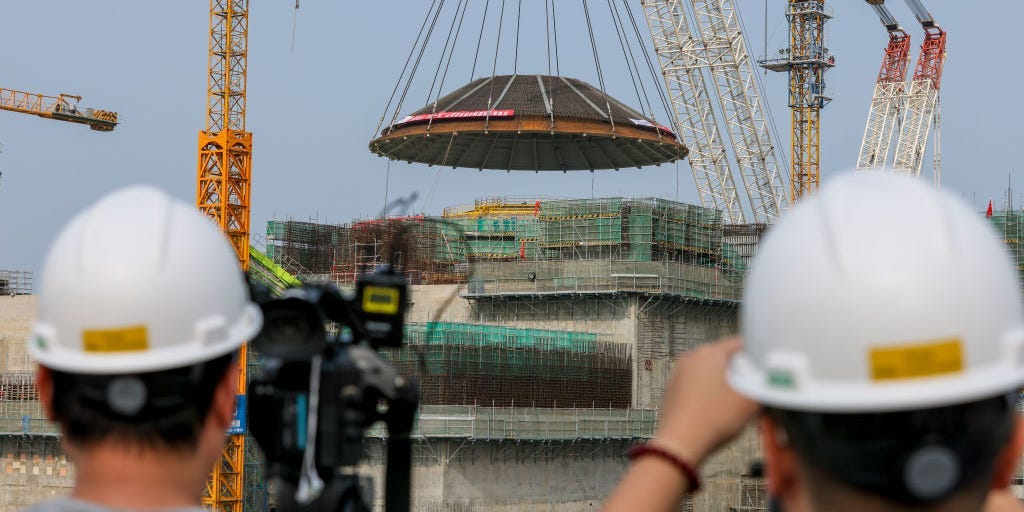
Understanding the Shift to SMRs
Big Tech companies are investing heavily in small modular reactors (SMRs) as a potential energy solution for the growing demands of artificial intelligence (AI) and data centers. SMRs, which produce less power than traditional reactors, have gained attention due to their promise of providing a sustainable energy source. Despite significant investments, experts remain uncertain about the effectiveness of SMRs in meeting future energy needs.
Key Insights on SMR Developments
- Four SMR companies have attracted nearly $3 billion in funding over the last eight years, with X-energy, TerraPower, Newcleo, and NuScale leading the way.
- The anticipated energy demands for US data centers could reach up to 90 gigawatts by 2030, prompting the need for innovative energy solutions.
- No SMRs are currently operational in the US, and the earliest projections for their deployment are around 2030, with projects like TerraPower’s Natrium and X-energy’s Xe-100 underway.
- Each company has its unique reactor design, with X-energy focusing on high-temperature gas-cooled reactors and TerraPower on sodium-cooled fast reactors, among others.
The Bigger Picture
The exploration of SMRs by major tech companies highlights a critical intersection between technology and sustainable energy. As the demand for energy surges, especially from AI and data centers, the success of SMRs could play a significant role in shaping the future of energy production. However, the uncertainty surrounding their efficiency and the complexities of their development pose challenges. The outcome of these investments may determine how effectively the tech industry can transition to greener energy sources while meeting escalating power needs.





