
Overview of the Breakthrough
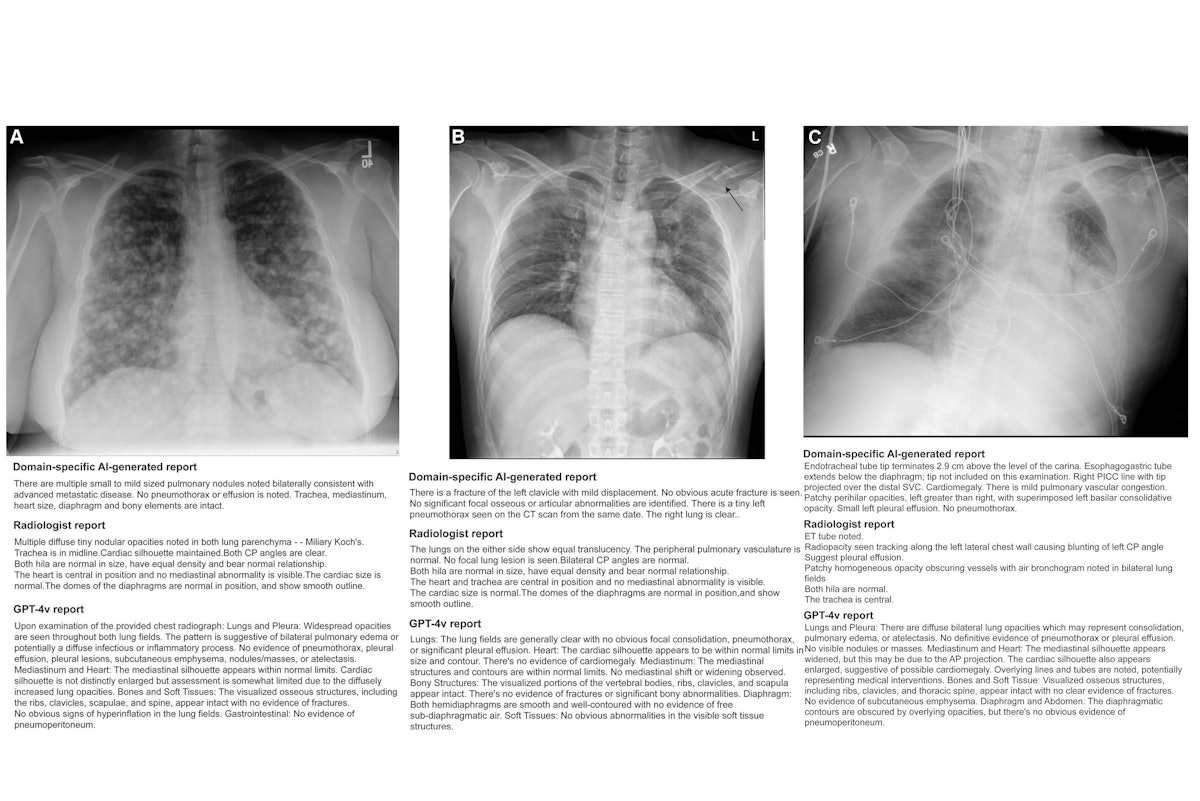
A new multimodal generative AI model has shown remarkable potential in diagnosing chest x-ray images with high accuracy. Developed by a team from Brigham & Women’s Hospital, this AI model can identify critical conditions like pneumothorax and subcutaneous emphysema. The research, published in Radiology, highlights the model’s ability to generate preliminary reports that radiologists often accept without changes. This advancement could significantly enhance the efficiency of radiologic workflows and improve patient care.
Key Findings
- The AI model achieved a sensitivity of 95.3% for detecting pneumothorax and 92.6% for subcutaneous emphysema.
- Among four radiologists, 70.5% accepted the AI-generated reports, compared to 73.3% for reports from other radiologists and only 29.6% for those generated by ChatGPT-4Vision.
- The model outperformed ChatGPT-4Vision in terms of agreement and quality, with statistically significant higher scores.
- Future research will focus on diverse case complexities and the usability of AI-generated reports in clinical settings.
Importance of the Innovation
This development in AI technology is crucial for the medical field, particularly radiology. It demonstrates how AI can reduce radiologists’ workloads, expedite report generation, and facilitate quicker diagnoses. As generative AI continues to evolve, it holds the promise of transforming how radiologists interpret and report findings. The insights gained from this study will guide future research and application of AI in clinical environments, ultimately aiming to enhance the quality of healthcare delivery.





