Understanding the Context Length Challenge
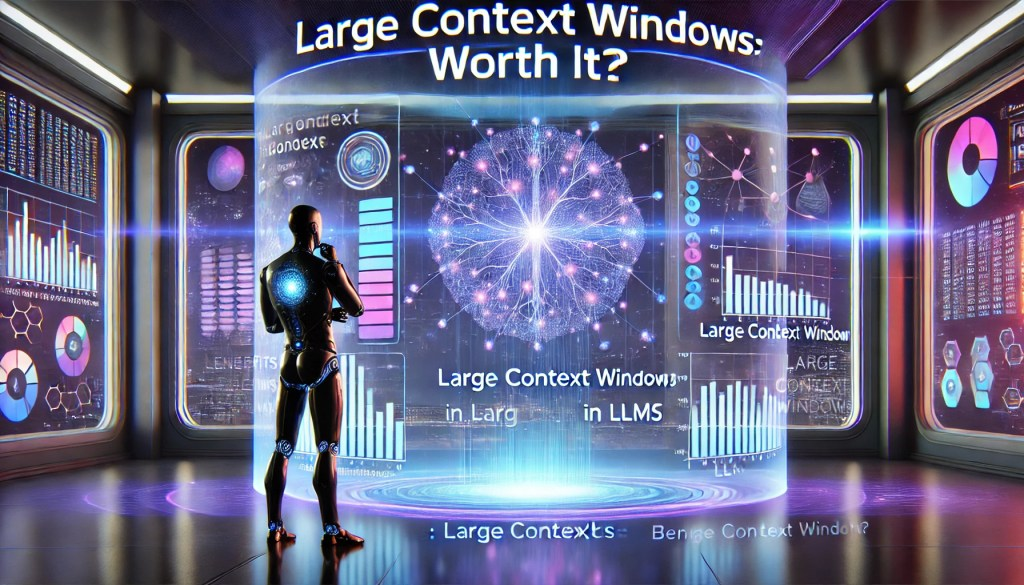
The expansion of large language models (LLMs) beyond the million-token threshold has sparked intense discussions in the AI sector. Models like MiniMax-Text-01 and Gemini 1.5 Pro can process millions of tokens, promising significant advancements in AI applications. The focus is on context length, which refers to how much text an AI can handle at once. Longer context windows are believed to improve comprehension and reasoning, allowing for the analysis of extensive documents in one go. However, there’s skepticism about whether these advancements translate into real business value.
Key Insights
- AI leaders are racing to increase context lengths for deeper understanding and fewer errors.
- Larger context windows can enhance capabilities in legal analysis, software debugging, and customer interactions.
- There are challenges, as some models struggle with long-range recall and performance degrades beyond a certain token limit.
- Companies must weigh the costs of large prompts against the efficiency of retrieval-augmented generation (RAG) systems.
The Bigger Picture
The debate over large context windows is crucial for the future of AI. While these models can process more information, they also come with increased costs and potential delays. Enterprises must assess their needs carefully, balancing the benefits of deep analysis with the economic implications. Innovations like GraphRAG could offer solutions by integrating knowledge graphs, enhancing reasoning capabilities. The ultimate goal is to create systems that not only handle vast amounts of data but also understand the relationships within that data effectively.