
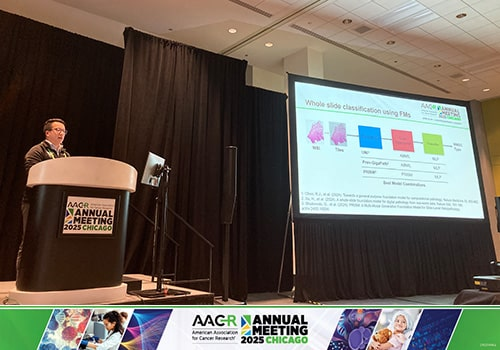
Overview of AI in Cancer Research
Artificial intelligence is making significant strides in cancer research, particularly in improving diagnosis and treatment. At the AACR Annual Meeting 2025, experts discussed how AI can address challenges faced by clinicians, especially in under-resourced areas where timely cancer diagnosis is critical. AI technologies are being developed to provide more accurate diagnostic tests, which are essential for patient care.
Key Insights
- AI-driven models are being used to predict cancer cachexia, a severe condition affecting many cancer patients, by analyzing routine clinical data and imaging scans.
- The SMAART-AI model can accurately assess skeletal muscle mass and integrate various clinical data to improve cachexia detection, achieving up to 85% accuracy in pancreatic cancer cases.
- Pretrained AI models are being explored for diagnosing nonmelanoma skin cancer (NMSC) in areas with limited resources. These models can significantly outperform traditional methods in identifying cancerous tissues.
- Simplified versions of these AI models still maintain high accuracy, demonstrating their potential for widespread use in low-resource settings.
Importance of AI in Cancer Care
The integration of AI in cancer diagnosis is crucial for enhancing patient outcomes. By enabling earlier detection of conditions like cancer cachexia and improving diagnostic accuracy for skin cancer, AI can facilitate timely interventions. This technology not only helps in identifying complex patterns in clinical data but also addresses the disparities in healthcare access. As AI continues to evolve, it promises to revolutionize cancer care, leading to more personalized treatment plans and improved survival rates.





