
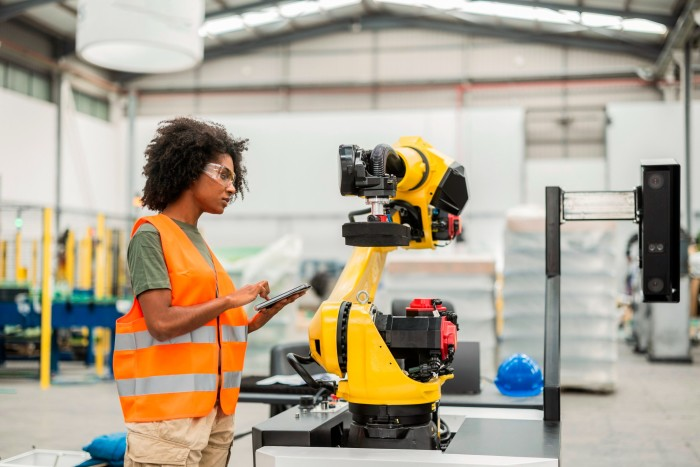
Understanding Cobots and Their Impact
Cobots, or collaborative robots, are designed to work safely alongside humans in various industries. They are smaller, more flexible, and easier to integrate into existing workflows compared to traditional industrial robots. This innovation has made automation accessible for smaller companies, allowing them to improve productivity without significant upfront costs. Cobots are capable of performing a wide range of tasks, including assembly, packaging, and even welding, which has led to their increasing popularity since their introduction in the 1990s. The cobot market is rapidly expanding, with sales nearing $3 billion annually and projected growth of over 30% through the decade.
Key Details About Cobots
- Cobots represented 11% of all industrial robots installed in 2023.
- They are equipped with safety sensors, allowing them to halt operations if a person enters their vicinity.
- Their intuitive programming means that many users can operate them without specialized training.
- Leading manufacturers include Universal Robots, Fanuc, ABB, and Kuka, reflecting a competitive market.
The Bigger Picture of Cobots
The rise of cobots is significant as it supports the growth of smaller businesses by providing a “soft entry” into automation. While concerns about job displacement exist, experts argue that cobots enhance productivity, enabling companies to expand and hire more workers in other roles. By taking over tasks that are dangerous or repetitive, cobots can free human workers to focus on more complex responsibilities. This shift not only boosts efficiency but also improves workplace safety and job satisfaction, marking a transformative step in the future of work.





