
Understanding the Shift
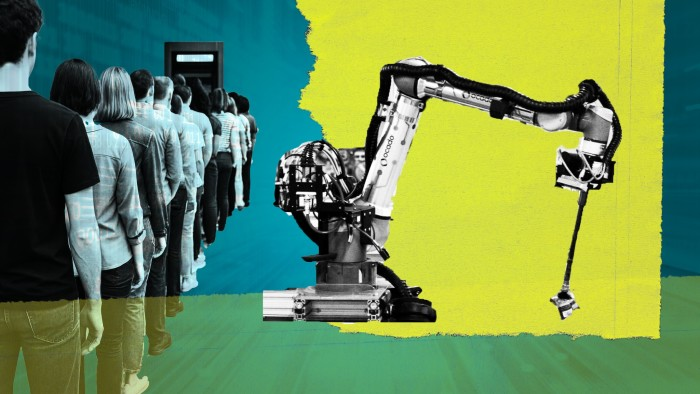
Recent developments in artificial intelligence (AI) and robotics are transforming the way companies operate, particularly in online grocery services. Ocado’s advancements have significantly reduced the time needed for order fulfillment, decreasing the workforce by hundreds. This trend raises concerns about job displacement as generative AI becomes more integrated into various industries. While some businesses have embraced AI, others are still on the fence, prompting discussions about the technology’s impact on employment.
Key Insights
- Ocado has cut human labor from 25 minutes to 10 minutes for a 50-item order, resulting in 500 fewer workers needed this year.
- Generative AI is changing job roles rather than eliminating them, allowing employees to focus on more valuable tasks.
- Companies like IBM and Klarna are automating HR and customer service roles, leading to significant job reductions.
- The demand for AI-skilled workers is increasing, with salaries rising substantially for those proficient in AI technologies.
The Broader Implications
The integration of AI into the workforce is not just about job losses; it is changing the nature of work. While some roles may disappear, others are evolving, creating a demand for new skills. This shift presents challenges, especially for mid-career workers who may struggle to adapt. As companies invest in AI, a divide is forming between those embracing the technology and those lagging behind. The future landscape of work will require a focus on human-centric skills to complement AI capabilities, ensuring workers are not left behind in this rapidly changing environment.





