
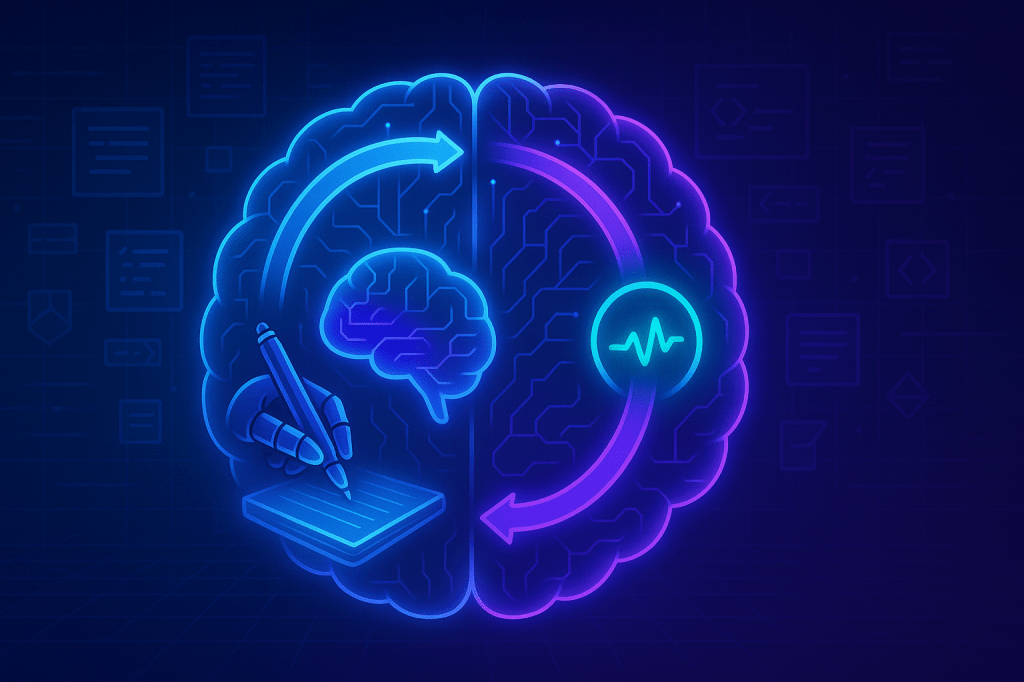
Understanding SEAL Framework
Researchers at MIT have introduced a groundbreaking framework called Self-Adapting Language Models (SEAL). This innovative approach allows large language models (LLMs) to learn continuously and adapt by updating their internal parameters. SEAL empowers LLMs to generate their own training data and create instructions for improvement, enabling them to absorb new information permanently and learn new tasks effectively. This is particularly beneficial for enterprise applications, where AI agents must adapt to dynamic environments and new data.
Key Features of SEAL
- SEAL uses a reinforcement learning algorithm to train LLMs to create “self-edits,” which are instructions for updating their weights.
- The framework operates on a two-loop system: an inner loop for temporary updates and an outer loop for performance evaluation.
- In tests, SEAL showed significant improvements in knowledge incorporation and few-shot learning, outperforming traditional methods.
- The approach can be adapted into a “teacher-student” model for more efficient learning in enterprise scenarios.
Importance of SEAL in the AI Landscape
The development of SEAL is crucial as it addresses the challenge of high-quality training data scarcity. By enabling models to generate their own training signals, SEAL can help AI systems continuously improve and adapt without relying heavily on human input. This capacity is vital for creating AI agents that can learn and retain knowledge over time, enhancing their performance in real-world applications. SEAL represents a significant step forward in making LLMs more dynamic and capable of evolving in complex environments.





