Understanding the Innovation
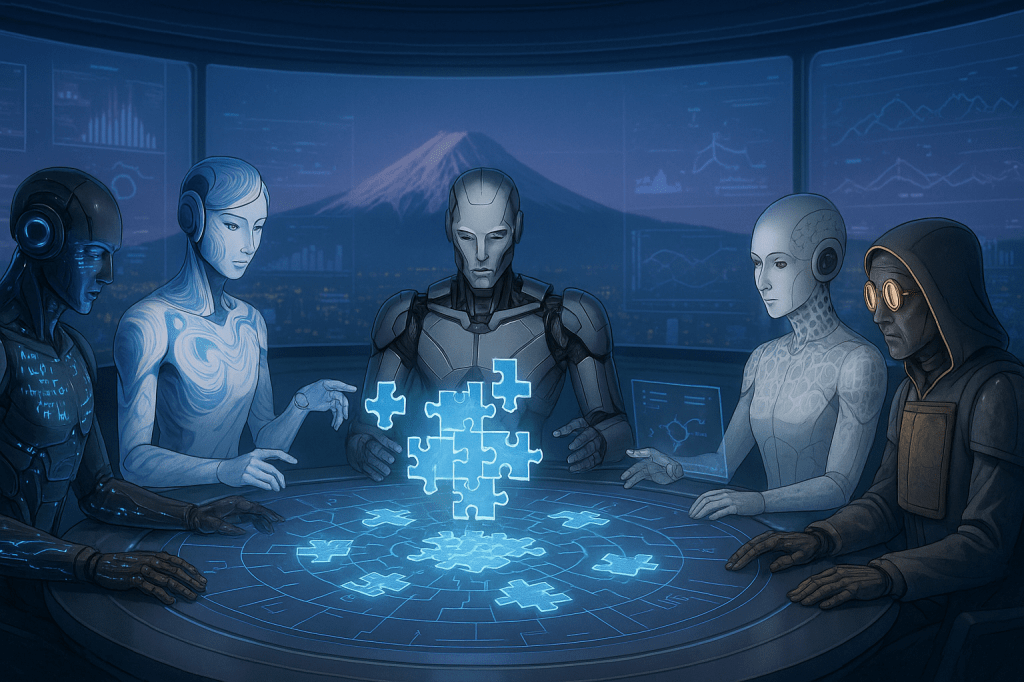
Sakana AI has unveiled a groundbreaking technique that enables multiple large language models (LLMs) to collaborate on tasks, creating a powerful “dream team” of AI agents. This new method, called Multi-LLM AB-MCTS, harnesses the unique strengths of different models to tackle complex problems that would be challenging for any single model. By allowing models to perform trial-and-error, businesses can optimize their AI systems, dynamically selecting the most suitable model for each part of a task. This approach could revolutionize how enterprises utilize AI, moving away from reliance on a single provider.
Key Features of Multi-LLM AB-MCTS
- The technique combines different search strategies to refine existing solutions or generate new ones.
- It employs Monte Carlo Tree Search (MCTS) to make strategic decisions on whether to deepen or widen the search for solutions.
- The method has shown success in testing, achieving over 30% accuracy on complex visual reasoning tasks.
- The open-source framework, TreeQuest, allows developers to implement this technique for various applications, enhancing the flexibility and capability of AI systems.
Significance and Future Impact
The introduction of Multi-LLM AB-MCTS marks a significant step towards creating more intelligent and adaptable AI systems. By leveraging the strengths of multiple models, businesses can achieve better outcomes and tackle previously unsolvable problems. This collaborative approach not only enhances performance but also addresses challenges like model hallucination, which can impact reliability in business contexts. As the open-source framework becomes available, it has the potential to drive innovation in enterprise AI applications, leading to more effective solutions across various industries.