
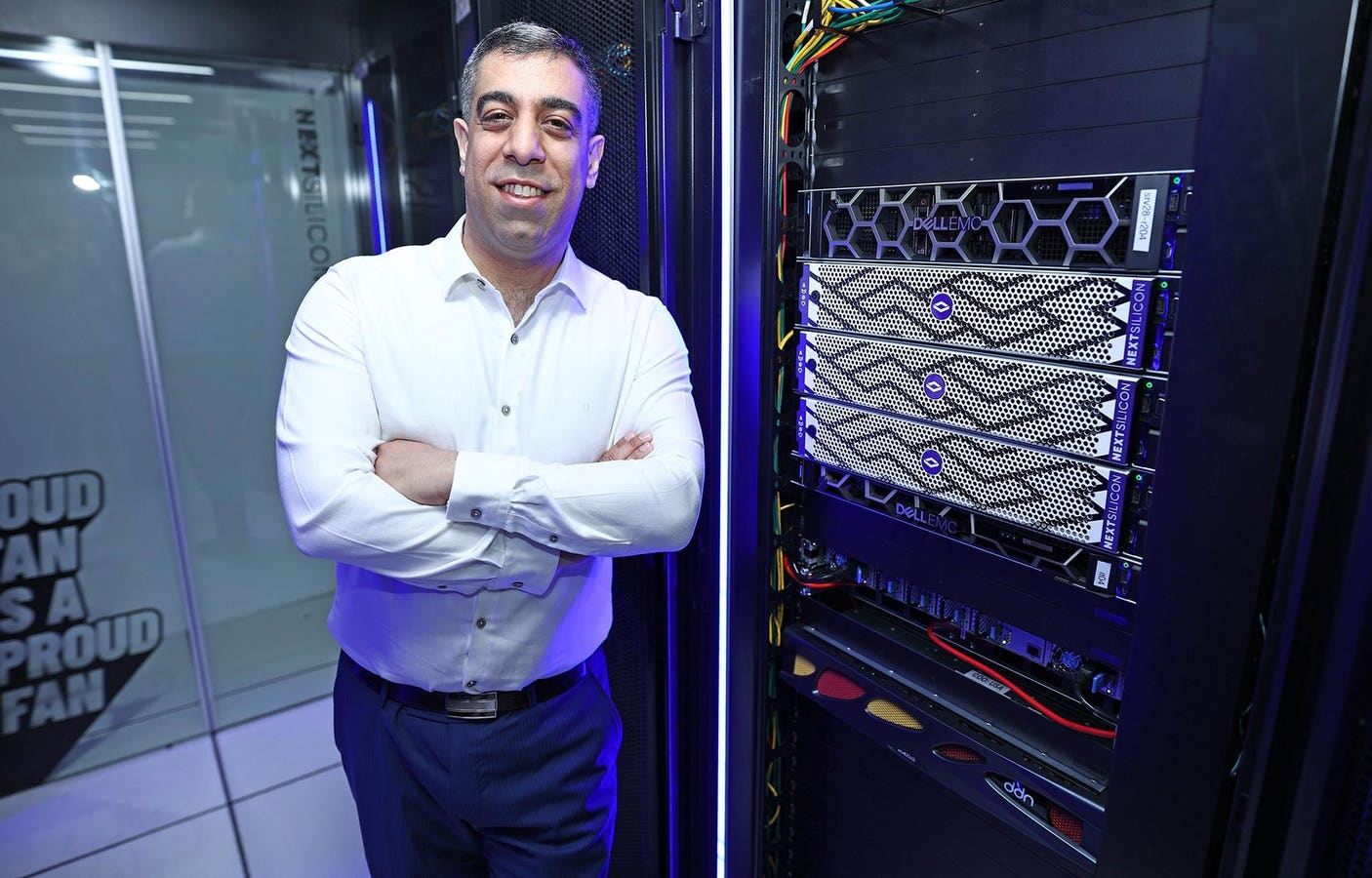
Overview of Next Silicon’s Innovation
Next Silicon is making waves in the semiconductor industry with its Maverick-2 accelerator. Founded by Elad Raz in 2017, the Israeli startup aims to revolutionize high-performance computing (HPC) and data center workloads through a new approach known as dataflow computing. Unlike traditional computing models that rely on instructions, dataflow computing allows data to dictate processing. This shift promises to enhance efficiency and performance, addressing long-standing limitations in conventional computing architectures.
Key Features and Performance Claims
- Maverick-2 is designed to achieve up to 10 times the performance of leading GPUs while consuming 60% less power.
- The architecture allows for seamless execution of existing code without the need for modification, making it user-friendly for developers.
- It dynamically optimizes itself based on real-time workload behavior, enabling it to adapt to various computational demands.
- Already deployed in systems like Sandia National Laboratories’ Spectra supercomputer, it has shown impressive benchmark results, outperforming CPUs and competing with GPUs in various tests.
Significance in the Industry
If Maverick-2’s claims hold true, it could reshape the landscape of HPC and AI-driven applications, providing significant energy savings for data centers. The success of this technology hinges not only on its performance but also on its integration into existing software ecosystems. As the semiconductor market prioritizes mature ecosystems, Next Silicon must ensure that developers can easily adopt its technology. If successful, Maverick-2 could prompt a reevaluation of traditional computing architectures, driving innovation in efficiency and programmability across the industry.





