Understanding the New Safety Metrics
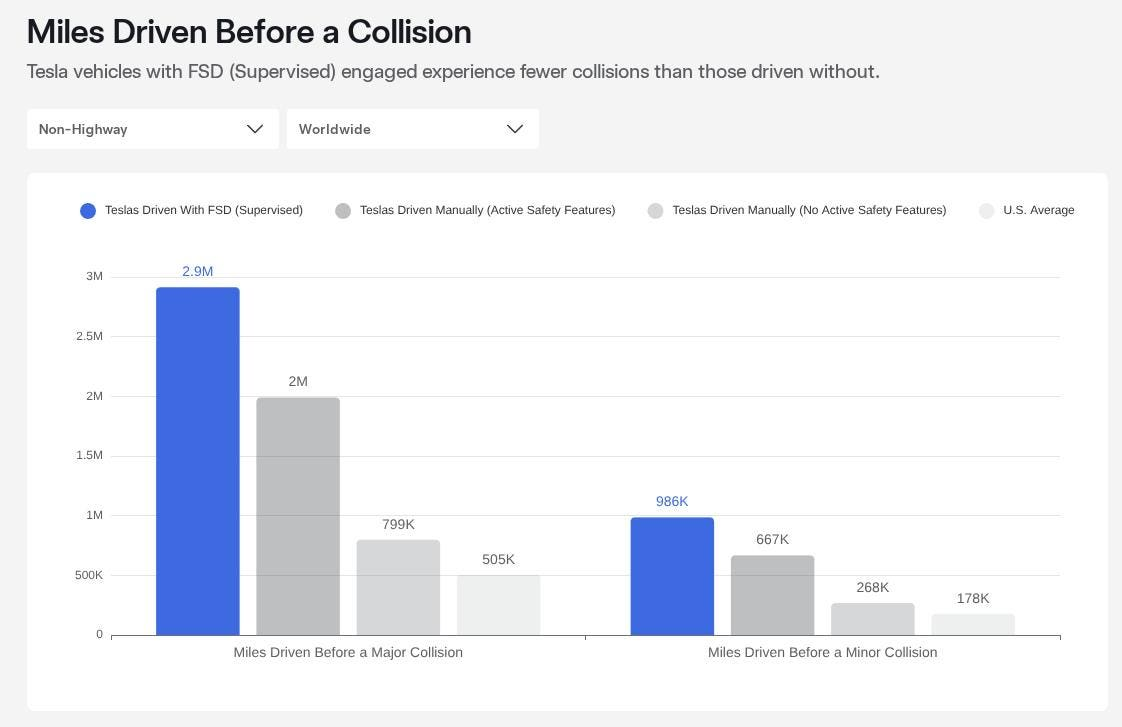
Tesla has recently updated its crash data for its Full Self-Driving (FSD) system, providing clearer insights into the safety of its vehicles. This new data replaces the previous Autopilot figures, which were criticized for being misleading. The latest statistics show that cars using FSD have significantly lower crash rates compared to those without it. This is particularly true in urban environments, where FSD-equipped Teslas are reported to be 1.5 times safer than their non-FSD counterparts and four times safer than older Tesla models that lack advanced safety features.
Key Highlights of the Findings
- FSD-equipped Teslas have nearly 1.5x better safety records on city streets globally compared to standard Teslas.
- The safety record is almost double in North America across all road types.
- Previous Autopilot claims were misleading, primarily focusing on freeway data.
- New data includes breakdowns for major and minor collisions, allowing for better comparisons.
The Bigger Picture on Road Safety
These findings are crucial as they suggest that FSD may enhance overall safety when used responsibly. However, there are concerns about driver complacency, as some users may neglect their attention on the road while using FSD. The ethical dilemma arises when considering whether to restrict access to FSD for diligent drivers to prevent misuse by others. While the data indicates that FSD is improving safety, skepticism remains due to Tesla’s history of presenting inflated statistics. Continued analysis will be necessary to determine long-term trends and the true effectiveness of FSD as it evolves.