
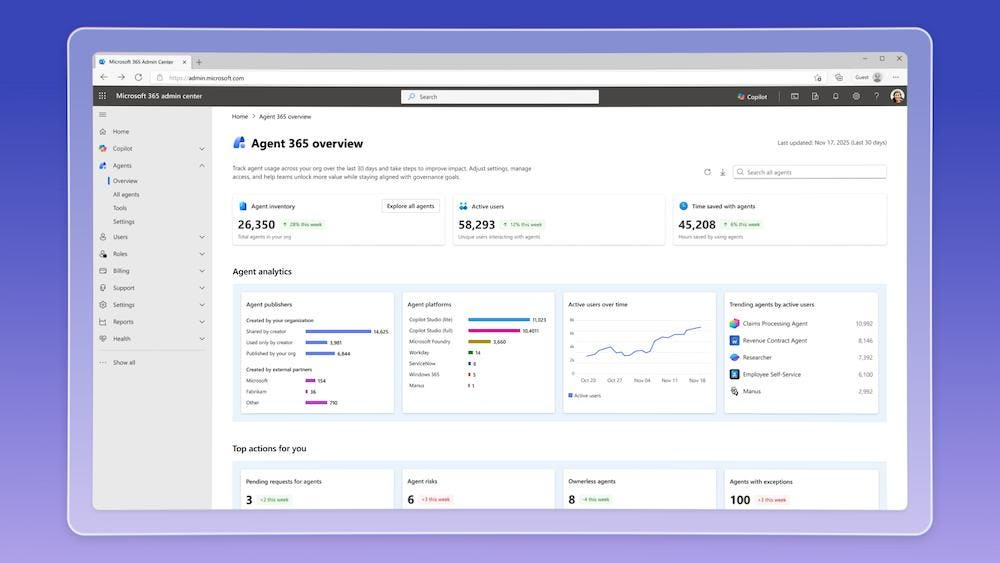
Understanding Agent 365
Microsoft has redefined how organizations manage digital agents with the introduction of Agent 365. This platform addresses significant operational challenges by integrating governance for agents into existing Microsoft infrastructures like Entra, Purview, and Defender. Rather than viewing agent governance as a mere innovation issue, Microsoft presents it as a crucial infrastructure concern. The platform aims to streamline the management of autonomous systems, ensuring that they operate within controlled parameters and do not lead to inefficiencies or security risks.
Key Features of Agent 365
- Centralized registry for all agents, tracking both authorized and shadow agents.
- Unique identities for agents through Microsoft Entra, allowing precise access control.
- Unified dashboards for real-time monitoring of agent performance and resource usage.
- Interoperability with Microsoft 365 applications, providing contextual data for agents.
- Integrated security measures to detect vulnerabilities and protect sensitive data.
Importance of Agent Governance
The implementation of Agent 365 is essential for organizations looking to scale their use of autonomous systems. As companies deploy more agents, they risk losing control over them, leading to potential resource waste and security breaches. The platform not only helps prevent these issues but also allows for better cost management by identifying redundant agents. As organizations increasingly rely on digital agents, a robust governance framework becomes necessary to ensure compliance, security, and operational efficiency. Ultimately, Agent 365 represents a proactive step toward responsible and effective management of digital agents within enterprises.





