Understanding Project AVA
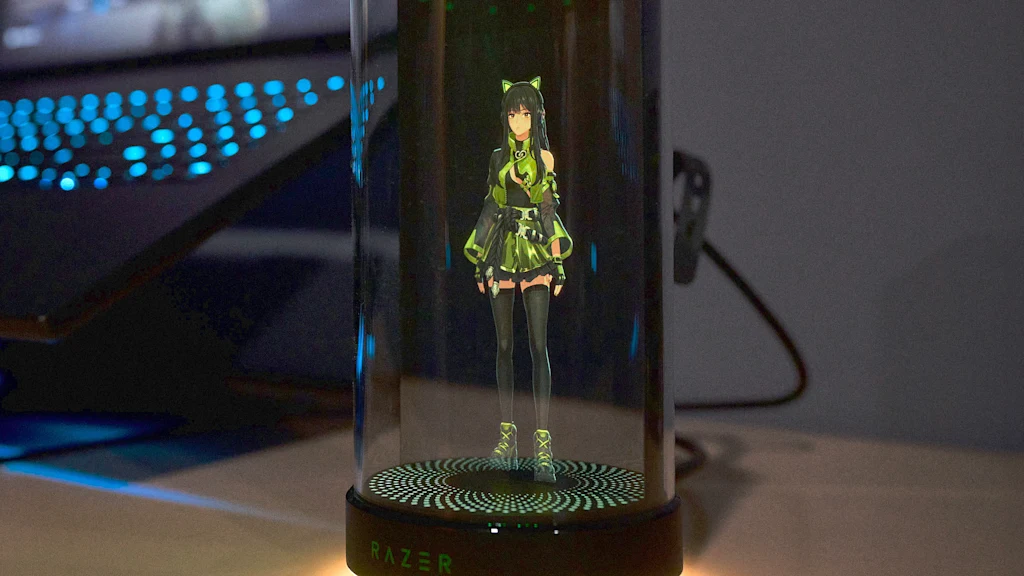
Razer has unveiled Project AVA, a unique product that aims to create an interactive AI hologram in a glass cylinder. This device features a 5.5-inch animated companion that can engage with users, provide gaming advice, and even track moods. Powered by xAI’s Grok, AVA uses a technology called “PC Vision Mode” to observe the user’s screen and interact in real-time. Critics are divided, with some calling it a “friend in a bottle,” while others are skeptical about its actual utility.
Key Features and Critiques
- AVA offers stylized avatars like “Kira” and “Zane” rather than realistic holograms, which may limit user engagement.
- Early reviews indicate that interactions can be inconsistent, leading to confusion and irrelevant responses.
- The association with xAI’s Grok raises ethical concerns, especially given recent controversies involving the AI model.
- Despite its flaws, the holographic AI assistant market is predicted to grow significantly, suggesting a demand for such technology.
The Bigger Picture
Project AVA highlights a growing trend towards AI companions, particularly among younger users who seek emotional support. However, the technology is still in its infancy, and while it aims to fill a social gap, there are risks involved, especially for vulnerable demographics. As the market evolves, the need for more realistic and ethically sound AI interactions will be crucial for fostering genuine human-like connections.