Understanding the Breakthrough
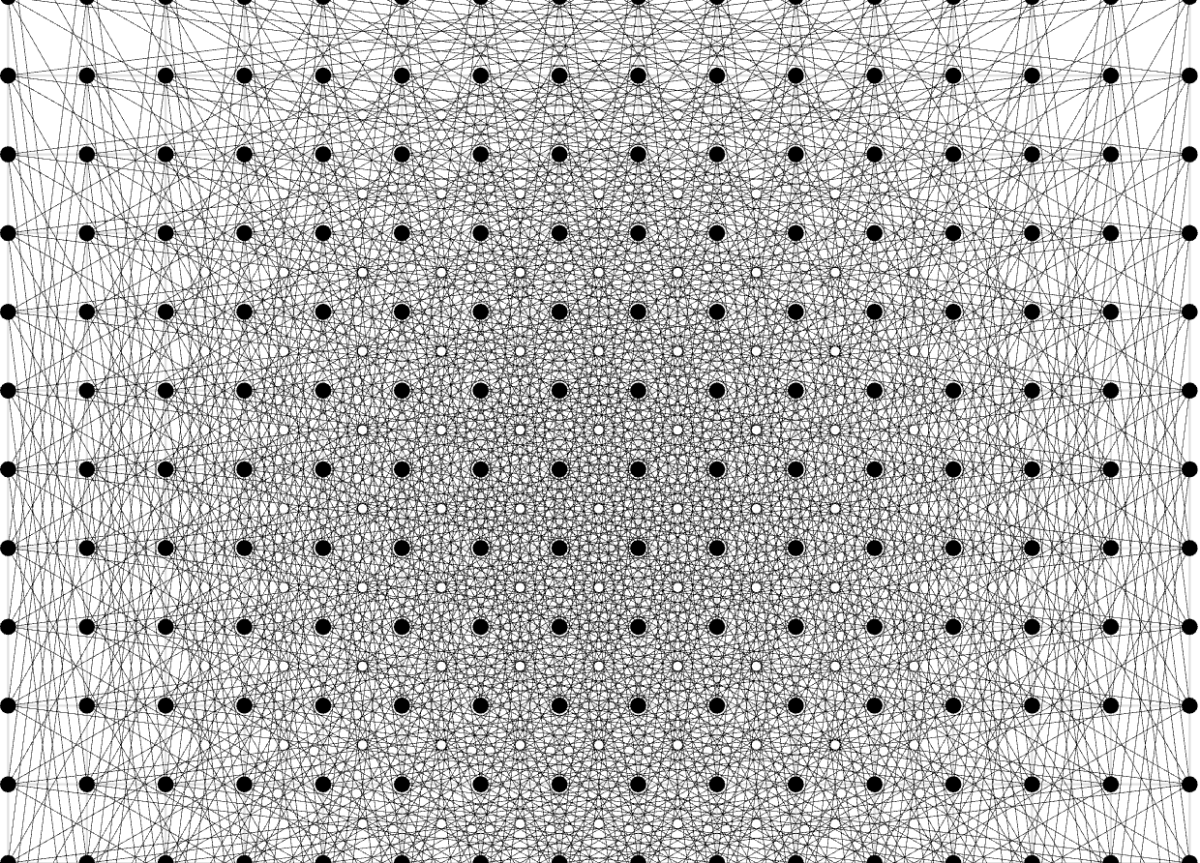
OpenAI has announced a significant achievement with its new reasoning model, claiming it has produced an original mathematical proof that disproves a famous conjecture in geometry. This conjecture was first proposed by mathematician Paul Erdős in 1946. This claim comes after previous controversies where OpenAI’s earlier models were said to have solved Erdős problems, but those were found to be existing solutions rather than new discoveries. This time, OpenAI has provided support from credible mathematicians to back its claims.
Key Details
- The new model is not specifically designed for math but can perform complex reasoning tasks.
- OpenAI asserts this is the first time an AI has autonomously solved a prominent open mathematical problem.
- The proof indicates that previous beliefs about optimal solutions in mathematics may need reevaluation.
- Mathematicians involved have praised the discovery, suggesting it opens new avenues for exploration in mathematics and other sciences.
Significance of the Discovery
This breakthrough is important as it showcases the potential of AI to tackle complex problems in fields beyond mathematics, like biology, physics, and engineering. It suggests that AI can help researchers make connections that were previously overlooked, leading to new discoveries and advancements. As mathematician Thomas Bloom highlighted, this achievement encourages curiosity about what other mathematical mysteries AI might help unveil in the future.