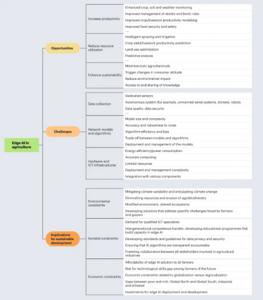
The integration of advanced artificial intelligence (edge AI) into farming practices is poised to revolutionize sustainable agriculture. A recent study proposes a roadmap for harnessing this technology to improve the efficiency, quality, and safety of agricultural production, while addressing environmental, social, and economic challenges. The study, published in Nature Sustainability, demonstrates how edge AI can be practically integrated into agricultural systems to meet the growing needs of sustainable food production. By deploying AI in agriculture, farmers can increase resource efficiency, improve crop quality, and reduce environmental impacts. The applications are vast, ranging from real-time crop management to optimizing resource use and enhancing monitoring and response capabilities to changing weather conditions. While challenges remain, the prospects opened up by these advances are promising, positioning edge AI as an essential pillar for the future of sustainable agriculture. As the world’s population continues to grow, this technological revolution could well transform the way we produce and consume food.
AI-Powered Farming Revolution
Deploying AI in agriculture is not without its challenges, it requires innovative solutions and the right infrastructure.
1–2 minutes

TOP STORIES

Unauthorized users have gained access to Anthropic’s Mythos, raising security concerns …

Clarifai has deleted millions of photos from OkCupid amid an FTC investigation into data misuse …

Nvidia’s Vera Rubin platform is set to revolutionize AI inference with unmatched performance …

Apple’s leadership transition highlights a strategic focus on silicon for AI innovation …

Apple’s leadership changes signal a strategic shift towards AI and silicon innovation …

Tennessee’s new law restricts AI claims in mental health but may create loopholes …