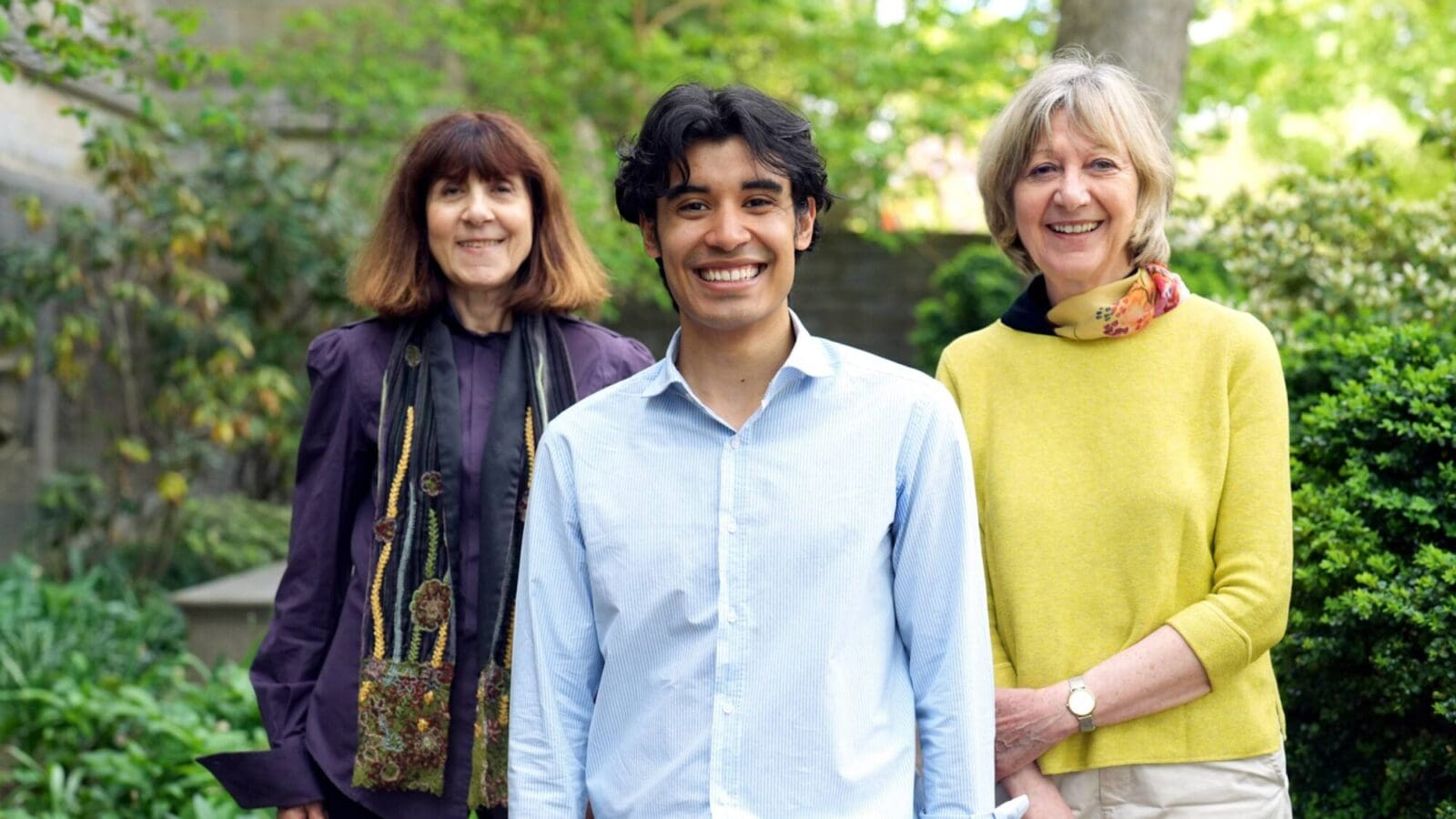
Fernando Avilés-García, a Princeton computer science major, has taken an innovative approach to analyzing Dante Alighieri’s 700-year-old masterpiece, the Divine Comedy. By building an artificially intelligent tool to examine the language of the epic poem, Avilés-García has bridged the gap between humanities and AI. His senior thesis, “Divining language: Unearthing medieval Italian through natural language processing (NLP),” has earned him departmental high honors and the inaugural Lucio Caputo Senior Thesis Prize. According to his thesis adviser, Christiane Fellbaum, Avilés-García’s tool has the potential to greatly benefit the Italian literature community and inspire future studies. What’s remarkable about Avilés-García’s story is how he overcame imposter syndrome, initially doubting his abilities in computer science, to create something truly groundbreaking. His project is a testament to the power of interdisciplinary approaches and the creativity that can emerge when humanities and AI intersect. As Natalia Ermolaev, executive director of the Center for Digital Humanities at Princeton, notes, many undergraduates are naturally drawn to building bridges between these two fields, and Avilés-García’s work is a shining example of what can be achieved when passion and innovation come together.
AI Meets Dante’s Divine Comedy
He has created a tool that I think will be beneficial for the Italian literature community and will inspire future studies.
1–2 minutes

TOP STORIES

Sony Music and Warner Music have sued Anthropic, accusing it of copyright infringement in AI training …

Huang believes Nvidia’s position in AI will lead to another year of record growth …

Anthropic’s report reveals a surge in distillation attacks by Chinese AI firms on U.S. models …

AI agents’ autonomy poses significant risks, as demonstrated by a recent breach …

IDScan has confirmed a data breach that exposed driver’s licenses of over 150 million individuals …

Matt Mullenweg has been placed on leave by Automattic’s board, stirring controversy …