
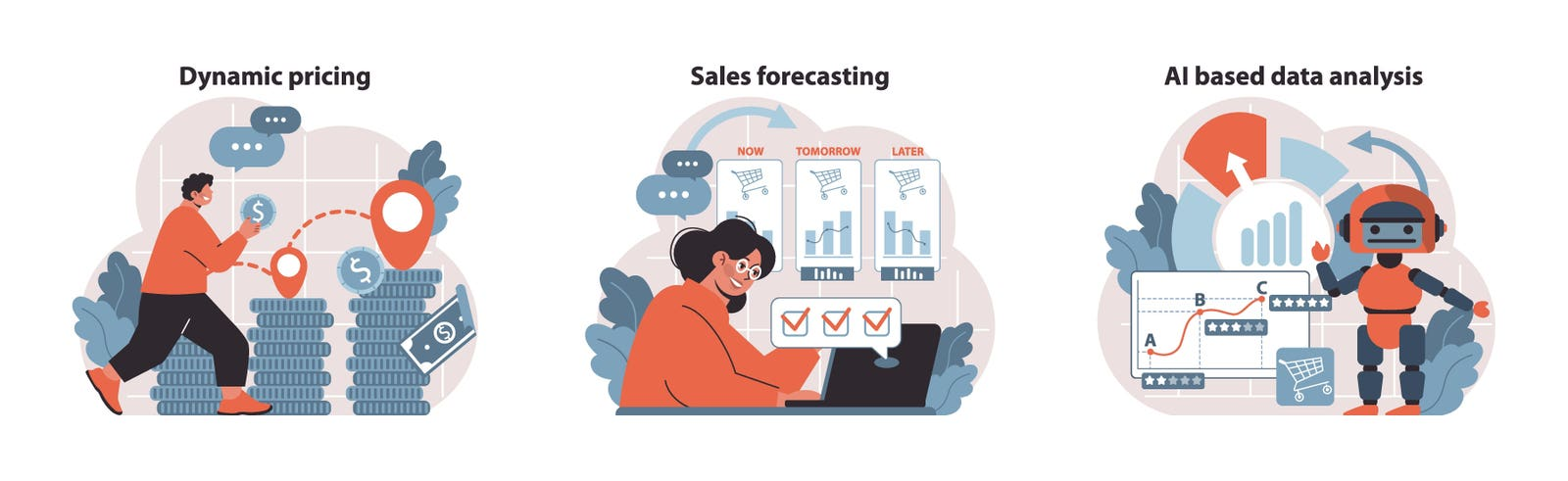
In the digital economy, companies continuously seek innovative methods to optimize their pricing strategies and enhance profitability. At the forefront of this revolution is artificial intelligence (AI). AI has emerged as a critical tool for implementing dynamic pricing strategies, enabling businesses to adjust prices in real-time based on market demand, consumer behavior, and other external factors.
Dynamic pricing, also known as surge pricing, demand pricing, or time-based pricing, is a strategy that allows companies to change prices based on current market demands. AI enhances this strategy by analyzing vast datasets to predict demand fluctuations, understand customer price sensitivity, and identify the optimal price point that maximizes revenue or market share. The AI models used for dynamic pricing rely on machine learning algorithms that continuously learn from market data, consumer purchasing patterns, competitor pricing, and even social media trends. These models can forecast demand for products or services in different scenarios and adjust prices in real time to match the predicted demand levels. The use of AI not only increases the efficiency of price adjustments but also introduces a level of precision that was previously unattainable with manual analysis.
The adoption of AI for dynamic pricing offers several benefits. It allows companies to maximize revenue, enhance competitiveness, improve customer segmentation, and optimize inventory management. However, companies must navigate challenges such as customer perception, regulatory compliance, and data privacy. Real-world examples of AI dynamic pricing include Uber, Amazon, Airbnb, and American Airlines, which have successfully used AI to refine their pricing strategies. As AI technology advances, dynamic pricing strategies are expected to become more sophisticated and widespread, but ethical considerations will remain crucial.





