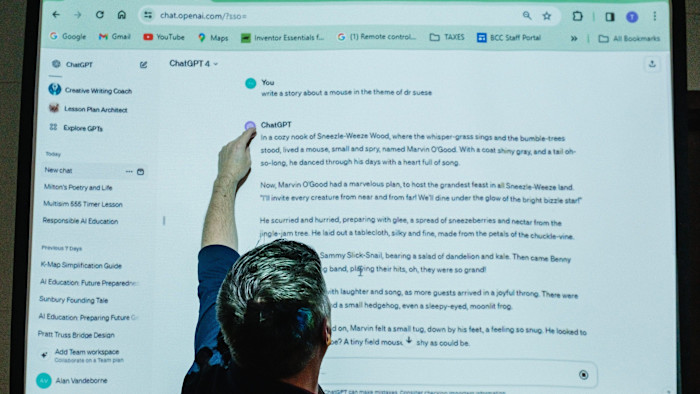
The use of artificial intelligence in journalism has sparked concerns among skeptics, but some journalists argue that a collaborative approach and discerning judgment can help fact-checkers avoid the pitfalls of AI and become more efficient. At the GlobalFact 11 summit, experts highlighted the importance of restricting AI usage to “language tasks” like drafting headlines and translating stories, rather than “knowledge tasks” like answering readers’ questions with chatbots. By using AI responsibly and ethically, fact-checkers can streamline workflows, enhance productivity, and combat misinformation. However, AI can’t replace human judgment, and fact-checkers must consult experts and cross-reference sources to produce accurate stories. AI can be useful for tasks like summarizing PDFs, extracting information from videos and photos, and making content more accessible, but its limitations and potential biases must be acknowledged.

Fact-Checking in the AI Era
“We really owe it to our audience to be one of the most informed citizens on AI because this is having a profound impact on every single industry, as well as the information ecosystem.”
1–2 minutes

TOP STORIES

AMD’s Helios aims to redefine AI computing, challenging Nvidia’s dominance …

OpenAI has launched ChatGPT Health to assist U.S. users with health queries while emphasizing the need for professional medical advice …

Nvidia’s Jetson chips are set to become the first GPUs on the moon, enhancing lunar exploration …

Google’s Gemini AI assistant is rapidly growing, nearing 1 billion users and challenging ChatGPT …

Michael Kratsios raises alarms about Moonshot’s alleged copying of U.S. AI technology …

The upcoming release of Kimi K3 raises concerns about the safety and control of powerful open-source AI systems …