
The rapid adoption of generative artificial intelligence (genAI) in education has sparked both excitement and concern among educators. While some see its potential to provide personalized support for teachers and students, others worry about its potential to facilitate undetectable cheating. Recent survey data indicate that 18% of teachers have used genAI, mostly to support differentiated lesson planning, and 56% of educators believe its use in schools will continue to grow. However, there is a lack of rigorous evidence on the impact of genAI on teaching and learning, with most findings relying on anecdotal reports. Researchers have found that genAI-based coaching tools can have small effects on targeted teacher practices, but more evaluation is needed to understand its potential to truly improve teaching and student learning. As districts introduce students to this technology, it’s essential to demand proof that these tools improve outcomes and do not unintentionally harm students.
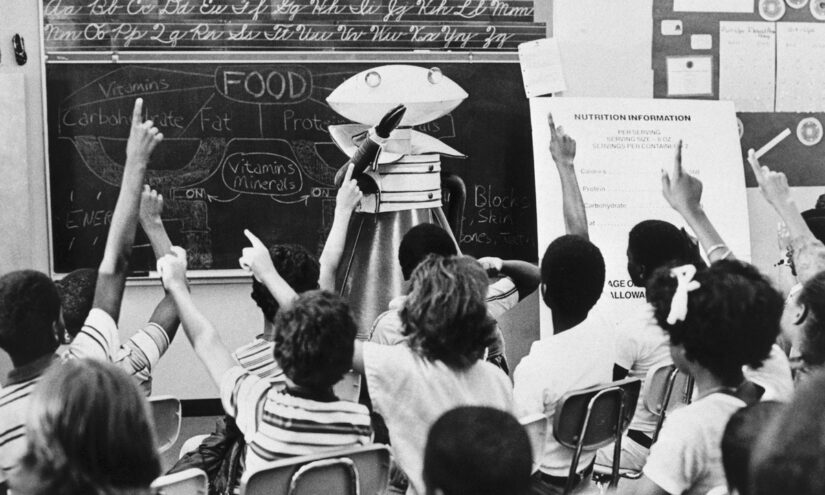
GenAI Revolution
Today, that potential has begun to come to fruition, with products like Khanmigo providing individualized tutoring already being adopted in Indiana, Florida, and New Jersey.
1–2 minutes

TOP STORIES

Obama stresses Democrats must prioritize AI safety and economic strategy …

Amodei’s call for caution in AI development highlights the need for safety and alignment …

Sony Music and Warner Music have sued Anthropic, accusing it of copyright infringement in AI training …

Huang believes Nvidia’s position in AI will lead to another year of record growth …

Anthropic’s report reveals a surge in distillation attacks by Chinese AI firms on U.S. models …

AI agents’ autonomy poses significant risks, as demonstrated by a recent breach …



