
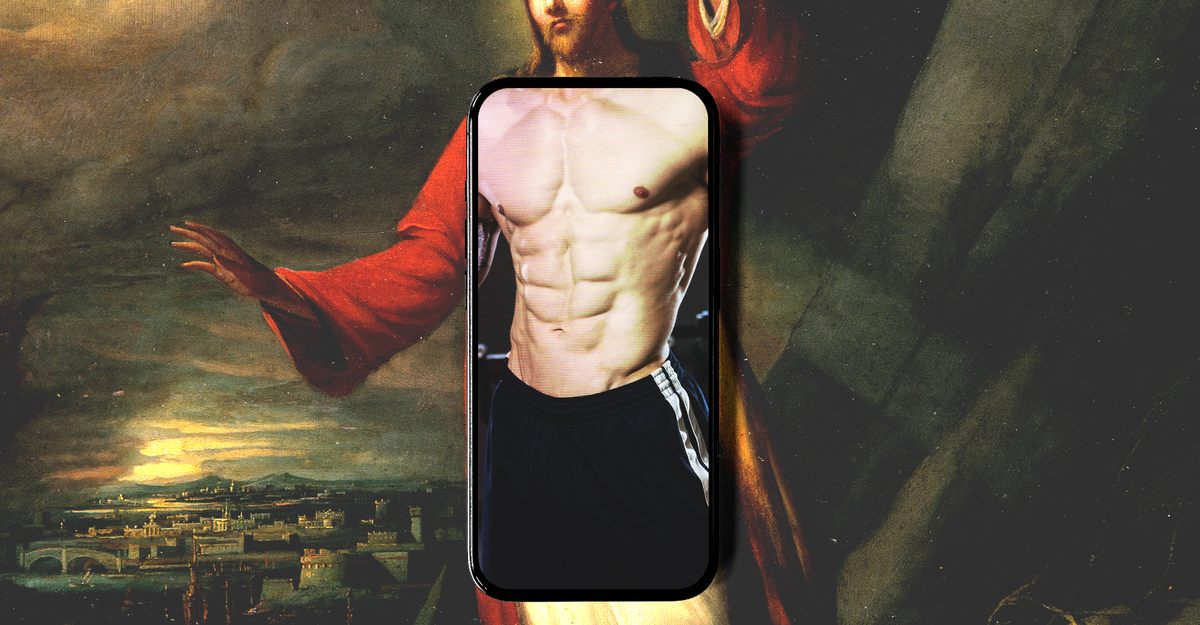
The rise of artificial intelligence-generated images on social media has led to a peculiar phenomenon: Jesus Christ, the son of God, is being depicted as a chiseled, ripped, and extremely good-looking individual, often in a boxing ring, punching the devil. These images, often accompanied by spam hashtags and captions, have garnered hundreds of thousands of likes and comments on Facebook and Instagram. The depictions of Jesus, ranging from Jared Leto-like icy-blue eyes to Coachella-esque flower crowns, have sparked questions about social media, religion, and art.
Experts suggest that AI image tools tend to create good-looking people by default, likely due to biased data sets and algorithmic feedback loops. Moreover, tech companies may intentionally design image-generating products that make hot people, as people tend to like photos of attractive individuals. The popularity of Hot Jesus appears to be fueled by bots, which are programmed to react to the images, propelling them to more users. The financial incentives behind these spam pages remain unclear, but researchers suspect that they build big audiences and leverage them to generate revenue.





