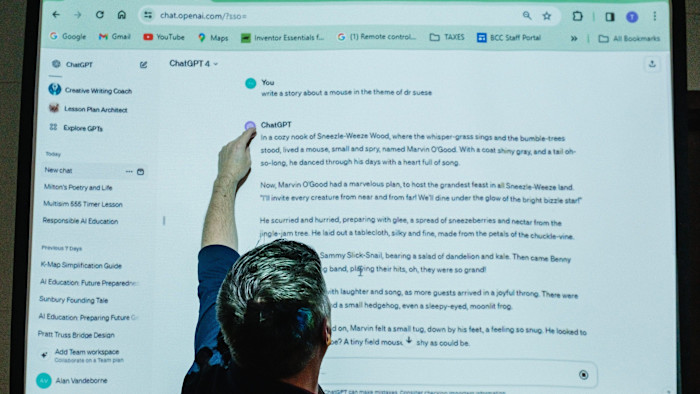
Researchers from Northwestern University and the University of Tübingen have developed a method to distinguish AI-generated text from human-written content. Their study, which analyzed 14 million academic article abstracts from 2010 to 2024, revealed a sudden increase in the usage of certain style words following the emergence of large language models (LLMs). The researchers estimate that at least 10% of 2024 abstracts were processed using LLMs. The study identified nearly 300 words that became abruptly more popular, including “delves,” “showcasing,” and “crucial.” Unlike previous word usage spikes, which typically involved content-specific nouns related to current events, this shift focused on adjectives and verbs. The researchers argue that this unprecedented change in vocabulary can serve as a marker for detecting AI-generated text, offering a potential solution to the growing challenge of identifying AI-authored content in various fields.

AI Text Detection – New Study Reveals Linguistic Clues
Study finds AI-generated text uses certain style words more frequently, offering a potential method for detection.
1–2 minutes

TOP STORIES

AMD’s Helios aims to redefine AI computing, challenging Nvidia’s dominance …

OpenAI has launched ChatGPT Health to assist U.S. users with health queries while emphasizing the need for professional medical advice …

Nvidia’s Jetson chips are set to become the first GPUs on the moon, enhancing lunar exploration …

Google’s Gemini AI assistant is rapidly growing, nearing 1 billion users and challenging ChatGPT …

Michael Kratsios raises alarms about Moonshot’s alleged copying of U.S. AI technology …

The upcoming release of Kimi K3 raises concerns about the safety and control of powerful open-source AI systems …