
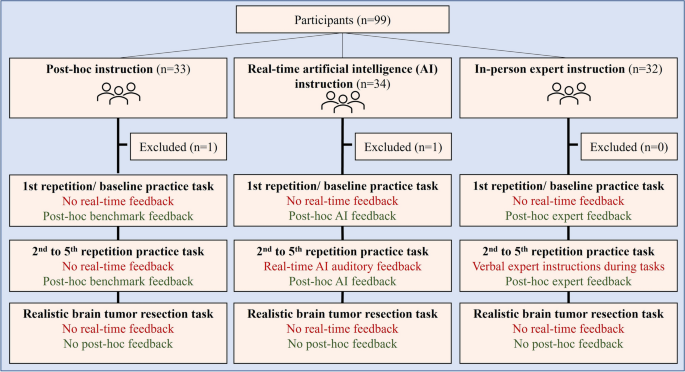
In a groundbreaking study, researchers at McGill University pitted AI-powered real-time feedback against expert human instruction in a neurosurgical simulation, and the results are nothing short of remarkable. The randomized controlled trial recruited 120 medical students, who were randomly assigned to one of three groups: post-hoc feedback, real-time AI instruction, or real-time expert instruction. The students performed two tumor resection tasks, with the AI group receiving real-time auditory instructions based on their performance metrics. The results showed that the AI group outperformed both the expert instruction and post-hoc feedback groups in terms of composite performance scores, bleeding risk, and tissue injury risk.
The study’s findings have significant implications for the future of surgical training, suggesting that AI-powered feedback can be a more effective and efficient way to teach complex surgical skills. The AI system, known as ICEMS, was able to provide personalized feedback to each student in real-time, allowing them to adjust their technique and improve their performance. In contrast, the expert instructors were limited by their own biases and subjective assessments.
The study’s authors noted that the AI system was able to identify errors and provide feedback in a way that was more objective and consistent than human instructors. This could potentially lead to more standardized and reliable surgical training, which could ultimately improve patient outcomes.





