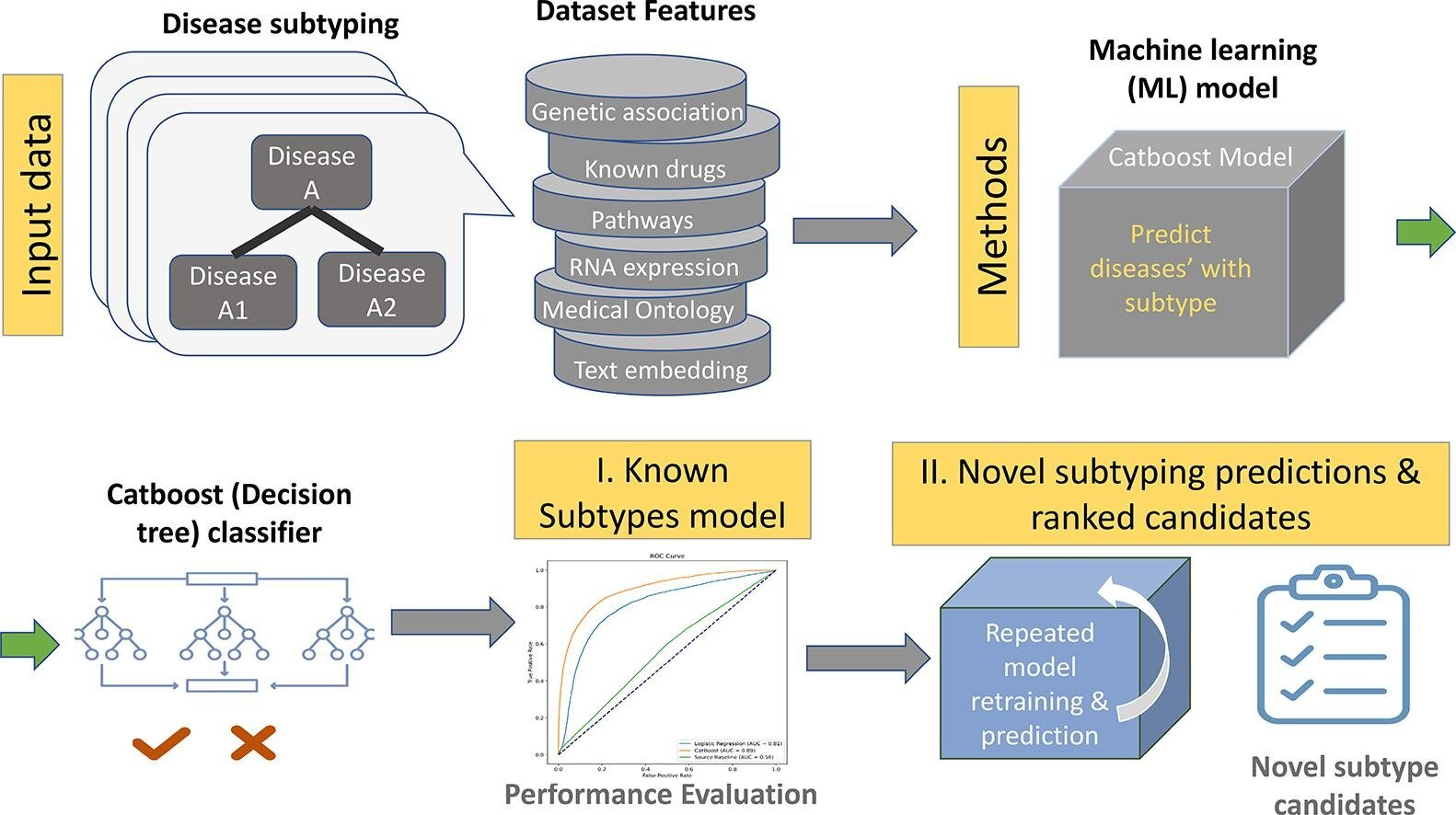
Researchers develop a groundbreaking machine learning approach to identify disease subtypes, potentially transforming medical diagnosis and treatment. This innovative method leverages artificial intelligence to analyze vast biomedical datasets, uncovering hidden patterns and classifications within diseases.
The study’s key findings include:
- A machine learning model achieving 89.4% accuracy in identifying known disease subtypes
- Integration of deep-learning language models to enhance performance
- Discovery of 515 disease candidates with previously unrecognized subtypes
This advancement holds significant implications for personalized medicine and rare disease research. By automating the process of disease subtype identification, researchers can accelerate the development of targeted therapies and improve patient outcomes. The ability to uncover new disease subtypes could lead to more precise diagnoses and tailored treatment strategies, particularly beneficial for rare and orphan diseases where resources are limited.