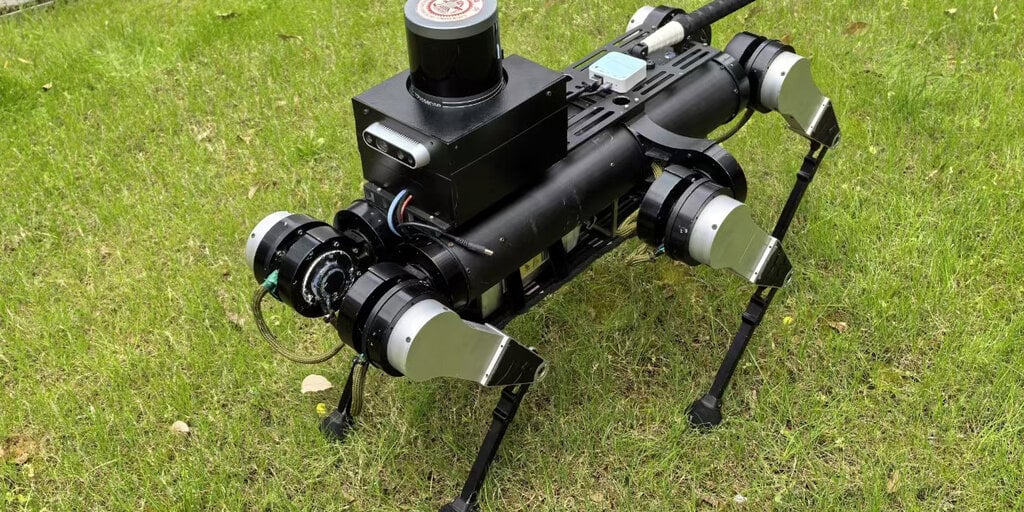
Chinese engineers have developed an innovative AI-powered robotic guide dog for the visually impaired. This cutting-edge technology combines advanced optics, voice recognition, and a speed-control cane to assist blind individuals in navigating their environment safely and efficiently.
The robot’s key features include:
- High-end optics for detecting environmental changes
- Audio sensors for understanding voice commands
- A six-legged design for optimal stability and smooth motion
- Integrated auditory, tactile, and force feedback interaction modes
This AI guide dog offers several advantages over traditional guide dogs:
- Real-time feedback on walking conditions and surroundings
- Ability to autonomously navigate to destinations and avoid obstacles
- Recognition of traffic lights and other important visual cues
- Wi-Fi connectivity for additional services and emergency contact
The development of this robotic guide dog represents a significant advancement in assistive technology for the visually impaired. By potentially reducing costs and addressing the shortage of traditional guide dogs, this innovation could make mobility assistance more accessible to a broader range of individuals. While production timelines and pricing details are yet to be announced, the potential impact on the lives of visually impaired people is substantial, offering increased independence and improved quality of life through technological innovation.