Bridging the Gap in AI Cognition
Artificial Intelligence has made remarkable strides, yet it lacks the human ability to construct spatial maps from scratch. This limitation has been a significant barrier to achieving true intelligence in AI systems. However, a groundbreaking study from Caltech’s Thomson lab has demonstrated that neural networks can be designed to build spatial maps using predictive coding algorithms.
Key Findings and Methodology
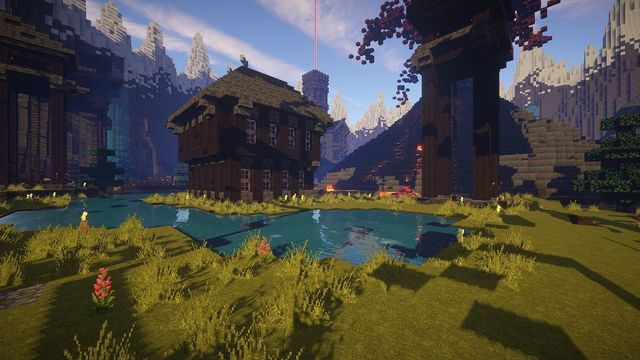
- Researchers used Minecraft to create complex environments for testing
- Neural networks were trained using videos of a player navigating the space
- The AI successfully learned to predict upcoming environments while moving
- Analysis revealed that the neural network stored object representations spatially
Implications for AI Development
This breakthrough could pave the way for more advanced AI cognition. By enabling neural networks to create their own maps, researchers are moving closer to replicating human-like problem-solving abilities in machines. This spatial organization of information could be the key to unlocking more complex cognitive tasks in AI, potentially leading to systems capable of generating new ideas and solving previously unsolvable problems.